
Primate guide
Chimpanzee trekking in Uganda: where to go and what to expect
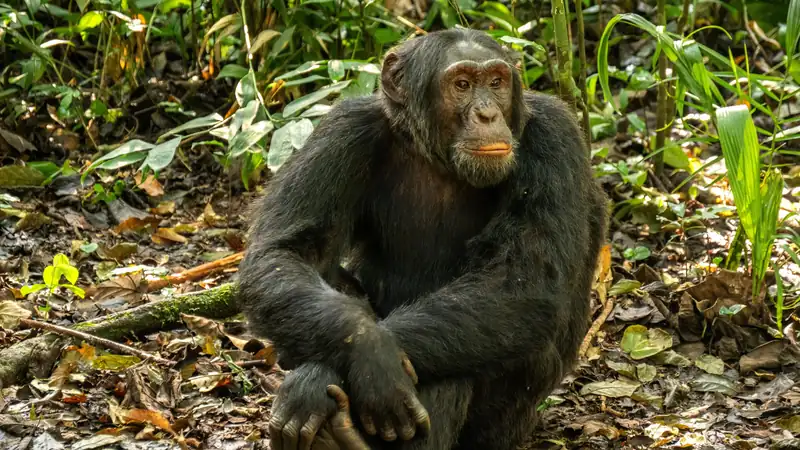
Chimpanzee trekking takes you into the forest to meet our closest living relatives for one unforgettable hour. This guide compares Uganda's chimpanzee forests, and it covers permits, age rules, the best time and how to combine chimps with gorillas.
Chimpanzee trekking in Uganda: the quick answer
Chimpanzee trekking is a guided forest walk to find a habituated group of wild chimpanzees. Once you find them, you spend one hour watching them feed, groom, play and call. Uganda offers more places for chimpanzee trekking than any other country in East Africa, and the best known is Kibale National Park.
Most visitors need to be at least 12 years old, and a moderate level of fitness is enough. A permit from the Uganda Wildlife Authority is required for every trek. We arrange it for you once you choose your dates.
Where to go chimpanzee trekking in Uganda
Several forests offer chimpanzee trekking, and each one has its own character. Use this table to compare them.
| Place | Region | Why go |
|---|---|---|
| Kibale National Park | West | Most reliable, many other primates |
| Kyambura Gorge | West | A deep gorge in the savannah |
| Budongo Forest | North-west | Mahogany forest near the Nile |
| Kalinzu Forest | West | Quiet forest near Queen Elizabeth |
| Semuliki | West | Lowland forest with rare birds |
If you have time for only one site, choose Kibale. Add a second site if you want to compare the groups or enjoy a different landscape.
Chimpanzee trekking in Kibale National Park
Kibale protects about 795 square kilometres of tropical forest, and it is home to 13 primate species. For chimpanzee trekking, it is the most popular choice in Uganda. Large communities live here, and rangers track them daily, so sightings are very likely.
Morning and afternoon treks
Treks start in the morning and again in the afternoon. A group of up to six visitors follows one ranger guide. Many visitors book both slots, because chimpanzees behave differently as the day goes on.
Other primates in Kibale
Red colobus, black-and-white colobus, grey-cheeked mangabeys, blue monkeys and L'Hoest's monkeys all live in the forest. The nearby Bigodi Wetland Sanctuary is a gentle community walk for birds and monkeys. Read our Kibale National Park guide for the park itself.
Chimpanzee trekking at Kyambura Gorge
Kyambura Gorge lies inside Queen Elizabeth National Park. The gorge is a deep, forested cut in the savannah, and it looks like a hidden world from above. A small chimpanzee community lives on the gorge floor.
The walk goes down into the gorge. The trail can be steep and slippery after rain, so wear shoes with grip. Sightings here are less certain than in Kibale. In return, you get a dramatic setting, and you can easily pair the trek with a boat cruise and game drives. See the Queen Elizabeth guide for the wider park.
Not sure which dates suit you? Send them to us and a named member of our team will check.
Chimpanzee trekking in Budongo Forest
Budongo is a large mahogany forest on the southern edge of Murchison Falls National Park. Chimpanzee trekking here fits naturally into a northern route, because the forest sits beside the road to the falls. The forest also hosts long-running research on chimpanzee behaviour.
Trekking happens from two sectors, Kaniyo Pabidi and Busingiro. Both offer shady walks, many forest birds and a good chance of seeing chimpanzees. Combine the trek with the Nile boat trip, as described in our Murchison Falls guide.
Kalinzu, Semuliki and Ngamba Island
Kalinzu Forest
Kalinzu is a quiet forest reserve close to Queen Elizabeth. It receives far fewer visitors than Kibale, and its trails suit travellers who want to avoid crowds.
Semuliki
Semuliki is a lowland forest on the Congo border. Birders love it, and chimpanzees live in the wider forest and reserve. Visits need a longer stay, because the area is remote.
Ngamba Island
Ngamba Island Chimpanzee Sanctuary lies on Lake Victoria, a short boat ride from Entebbe. It cares for orphaned chimpanzees that cannot return to the wild. A visit is not a trek, but it suits families and travellers with a free day near the airport.
What happens on a chimpanzee trek
- Briefing. Rangers explain the rules, the route and the group size.
- Walk in. Trackers radio the chimpanzees' position, and you follow a trail into the forest.
- The hour. You watch the chimpanzees feed, groom and travel. They move quickly and call loudly.
- Walk out. You return to the trailhead, usually with a certificate and a late meal.
Chimpanzees are lively. Unlike gorillas, they often travel on the ground at speed and climb high in the trees. Be ready to move with them, to look up often and to listen for their calls. In total, a trek lasts between two and five hours.
How chimpanzees live
Chimpanzees are our closest living relatives, sharing about 98 per cent of our DNA. They live in communities of 20 to more than 100 animals. Within a community, small groups split and join again through the day, depending on food and company. The IUCN Red List classes chimpanzees as Endangered.
Males stay in the community where they were born, and females usually move to a new one. Social bonds matter a great deal, and you will see grooming, play and noisy greetings. Their calls, known as pant-hoots, carry far through the forest. Many visitors say these sounds are the highlight of the trek.
A longer visit: the habituation option
The habituation experience is a longer visit to a chimpanzee community that is still learning to accept people. Visitors follow researchers and trackers from early morning and stay with the chimpanzees for several hours. Because the group is small and the day is long, this option suits keen photographers and wildlife lovers.
The minimum age is higher than for a standard trek, and the day is physically demanding. Spaces are limited, so ask us early. Our gorilla equivalent is described in the habituation or trekking guide.
Chimpanzee trekking permits, age and group size
Every visitor needs a permit for their date, and rangers check it at the briefing. Permits are personal and tied to a date and a site.
- Age. The minimum age for a standard chimpanzee trek is 12.
- Group size. A maximum of six visitors follow one guide.
- Names. Passport names must match your permit.
- Operators. Visitors from outside East Africa usually book through a licensed operator.
Fees depend on the site and the date, so we confirm them in your quote. For the process behind permits, read our permit booking guide, since the steps are very similar.
Not sure which dates suit you? Send them to us and a named member of our team will check.
Rules for chimpanzee trekking
The rules protect the chimpanzees, who catch human illnesses easily. Follow every instruction from your guide.
- Stay about eight metres from the chimpanzees, or as your ranger directs.
- Do not trek if you have a cold, flu or stomach illness.
- Wear a mask when your guide asks.
- Keep your voice low, and never use flash.
- Do not eat or drink near the animals.
- Carry all litter out of the forest.
Chimpanzees can move fast, and they can be bold. Stay with your group, and never touch them.
Best time for chimpanzee trekking
Chimpanzees live in the forest all year, so chimpanzee trekking runs in every month. The drier months, June to September and December to February, bring firmer trails. During fruiting seasons, chimpanzees may gather in fruiting trees, which makes them easier to find.
Wet months make the forest slippery and the walk slower. They also bring fewer visitors and lush scenery. Pack a rain jacket in every season. For month-by-month advice on gorilla trekking, which overlaps, see our best time to go guide.
How hard is chimpanzee trekking?
Most treks are easier than gorilla treks. The terrain is gentler, and the group often finds the chimpanzees sooner. Even so, chimpanzees move, so the walk can turn long. Forest trails can be wet, with roots, mud and small streams.
Wear sturdy boots and long trousers, and walk at a steady pace. A moderate fitness level is enough. If you have a health concern, speak to your doctor before booking. See our difficulty guide for the walking tips that apply to both treks.
Chimpanzee trekking or gorilla trekking?
These are two different encounters. Gorillas are calm, large and slow. Chimpanzees are quick, loud and playful.
| Gorillas | Chimpanzees | |
|---|---|---|
| Mood | Calm family groups | Busy, noisy communities |
| Time with animals | One hour | One hour |
| Walking | Often steeper | Usually gentler |
| Minimum age | 15 | 12 |
| Photography | Dim forest, steady subjects | Fast action in the canopy |
Most visitors do both. Read our Uganda gorilla trekking guide and our Rwanda gorilla trekking guide to plan the gorilla half.
What to pack for chimpanzee trekking
Pack for humid forest and sudden rain. Light layers dry fastest, so they work better than thick clothing.
- Waterproof walking boots or shoes with strong grip.
- Long trousers and a long-sleeved top.
- A rain jacket and a small daypack.
- Insect repellent, a hat and sunscreen.
- Binoculars, water and snacks.
The full checklist is in our packing guide. It works for chimpanzees too.
Photographing chimpanzees
Chimpanzees move quickly, and the forest is dark. Use a fast lens, raise your ISO and shoot at a quick shutter speed. A lens of 200 to 400 mm is useful, because chimpanzees often sit high in trees. Phones also work if you turn off the flash.
Look up as often as you look ahead. Many of the best moments happen in the canopy.
Not sure which dates suit you? Send them to us and a named member of our team will check.
Chimpanzee trekking in Rwanda
Rwanda also offers chimpanzee trekking. Nyungwe National Park is a large montane forest in the south-west, and it holds 13 primate species. Gishwati-Mukura National Park shelters a smaller group. Visitors usually add these forests after a gorilla trek in the volcanoes. Our Rwanda gorilla trekking guide explains the wider route, and our Rwanda tours show examples.
Sample itineraries with chimpanzee trekking
Here are three common shapes. We adjust each one to your dates.
| Length | Route | Result |
|---|---|---|
| 3 days | Kampala to Kibale for a morning and afternoon trek | Chimps on a short trip |
| 5 days | Kibale, then Queen Elizabeth with a Kyambura trek | Chimps and a classic safari |
| 8 to 10 days | Murchison Falls, Kibale, Queen Elizabeth, Bwindi | Chimps and gorillas together |
See our 3-day Kibale chimpanzee safari, our 5-day gorilla and chimpanzee safari and the 10-day best of Uganda safari.
Behaviour you may see on a trek
Every trek is different, since the chimpanzees decide what happens. Even so, some behaviours are common, and your guide will point them out.
- Grooming. Chimpanzees pick through each other's hair for long periods, which builds friendships.
- Feeding. They climb fig and other fruiting trees, and they eat leaves, seeds and sometimes insects.
- Calling. Loud pant-hoots rise to screams, and other chimpanzees answer from far away.
- Play. Young chimpanzees wrestle, swing and chase one another.
- Tool use. Chimpanzees use sticks and leaves in some places to reach food or water.
Patience pays off. Sit quietly, watch the interactions and let the hour unfold. Many visitors find that the quiet moments are the ones they remember most.
Chimpanzee facts worth knowing
A few facts make the trek richer. Eastern chimpanzees live in Uganda, and the country is home to several thousand of them. Adult males are strong, yet they are shy of people until habituation. Each night, chimpanzees build a fresh nest of branches high in a tree.
Because they eat mainly fruit, their movements follow the trees in fruit. That explains why a group can be near one day and far the next. Rangers read the signs, including fresh dung, half-eaten fruit and distant calls, to find the group. Watching the trackers work is a pleasure in its own right.
Making the most of your hour
The hour passes fast. A few habits help you enjoy it fully.
- Set your camera before you reach the group.
- Put your phone away for part of the hour, and simply watch.
- Look for the whole community, not only the nearest animal.
- Listen to your guide, who names individuals and explains their relationships.
Afterwards, write down what you saw while the memory is fresh.
Families, seniors and special needs
Chimpanzee trekking is often a good choice for families, because the minimum age is 12 and the walk is usually shorter than a gorilla trek. Teenagers who are too young for gorillas can often join a chimpanzee trek.
Older travellers do well too. Walk slowly, use a walking stick and ask your ranger to set an easy pace. If mobility is limited, tell us at the start, and we will ask about the gentlest trail. Kibale generally offers easier terrain than the gorilla forests.
Where to stay for chimpanzee trekking
Lodges around Kibale range from simple bandas to refined forest lodges. Staying close to the park gate saves time in the morning, so you reach the briefing without a rush. Near Kyambura, lodges overlook the gorge or the savannah. Near Budongo, camps sit inside the forest edge or beside the Nile.
We choose lodges to match your permit date and style. Tell us what matters most, whether it is comfort, views or simple value, and we recommend options without pressure.
Birds and other wildlife around the forests
The forests are a feast for birders. Kibale and Budongo each record several hundred bird species, from hornbills and turacos to rare forest specialists. Walks at the edge of the forest or in nearby wetlands add a calm contrast to the trek.
Look out for elephants near Kibale and Queen Elizabeth, and for butterflies on the forest tracks. A spare half day for birding is easy to add.
Common mistakes to avoid
- Trekking only once. A second slot often brings a different, better sighting.
- Wearing the wrong shoes. Slippery roots punish thin soles.
- Ignoring a cold. Chimpanzees catch illness, so do not trek if you are unwell.
- Packing too little for rain. Showers arrive without warning.
- Leaving camera settings late. Chimpanzees move fast.
Avoid these, and your chimpanzee trekking day will run smoothly.
A morning at Kibale, hour by hour
A typical Kibale morning gives you a feel for the day. Times shift with the season, so treat them as a guide.
| Time | What happens |
|---|---|
| 6:30 am | Breakfast at the lodge |
| 7:30 am | Arrive at the park gate and register |
| 8:00 am | Ranger briefing and group assignment |
| 8:30 am | Walk into the forest with trackers |
| 10:00 am | Reach the chimpanzees and begin your hour |
| 11:00 am | Walk out and return to the gate |
| 12:30 pm | Lunch and rest |
The afternoon trek follows the same pattern, starting around two o'clock. Because both sessions are short, you can easily do each in one day. Doing so gives you two different encounters, with a rest in between.
Chimpanzee trekking with other Uganda activities
Chimpanzee trekking pairs well with many other experiences. At Kibale, add a walk in the Bigodi Wetland Sanctuary or a visit to a crater lake. Queen Elizabeth lets you combine Kyambura with the Kazinga Channel cruise and a game drive in Ishasha. Further north, Budongo joins neatly with a boat trip to the falls.
These pairings keep the route interesting and spread the travel. Our Uganda safaris show how each one can fit together, and our Uganda tours offer more routes. For an overview of every park in the country, visit our Uganda national parks guide.
Health and safety on the trail
Chimpanzee trekking is safe when you follow your guide. The main risks are slips, stinging nettles and tiredness. Wear long trousers, tuck them into socks if needed and walk steadily.
Speak to a travel clinic before you fly, and carry personal medicines. Bring water and a snack, and tell your guide at once if you feel unwell. Travel insurance that covers medical evacuation is wise, since the forests are far from major hospitals.
Chimpanzee trekking and responsible travel
Good tourism leaves a forest better than it found it. Small habits add up, and your guide will show you how. Stay on the trail, carry out all waste and avoid plastic where you can. Refill a bottle at the lodge instead of buying new ones.
Think about people as well as animals. Hire local guides, shop at community stalls and ask before photographing anyone. Pay fairly, and tip in line with local custom. Visits like these show communities that standing forest is worth more than cleared land.
Finally, tell friends the story honestly. Say that the chimpanzees are wild, that sightings are not guaranteed and that rules exist for good reasons. Honest stories help future visitors prepare, and they keep expectations realistic for everyone.
Planning your chimpanzee trekking dates
Permits for popular dates can run short in the dry seasons, especially for the habituation experience. Send your preferred dates early, along with a second choice. If you are also trekking gorillas, fix the gorilla permit first, then place chimpanzees before or after it.
Leave a buffer day between long drives and treks. Roads in the west are winding, and tired travellers enjoy less. A relaxed schedule gives you the best chance of two treks at your chosen site.
Conservation and the future of chimpanzees
Chimpanzees face habitat loss, snares and disease. Permit fees and responsible tourism pay for rangers, research and community projects. Groups such as the Jane Goodall Institute also work with local people on forest protection.
When you trek, you help. Your fees fund patrols, and your respect keeps the animals safe. Choose lodges that hire local staff and buy crafts from community groups. For the wider picture of Uganda's protected areas, read our Uganda national parks guide.
Plan chimpanzee trekking with a licensed team
We are a licensed Ugandan operator. One named member of our team plans your route and arranges your permits.
- Tell us your dates. Send your dates and group size, or message us on WhatsApp.
- Choose your sites. We suggest where to trek chimpanzees and how to link them.
- Get one clear quote. It lists everything included.
For more answers, read our frequently asked questions and our trek planning guide.
Wildlife you may see
More guides on this topic
- Kyambura Gorge chimpanzee trekking: what to expect. Trek the deep, green gorge in the savannah.
- Chimpanzee habituation experience: a full day in Kibale. A full day with a community in Kibale, for keen wildlife lovers.
- Golden monkey trekking: meet Uganda's bamboo-forest primates. Meet rare golden monkeys in the bamboo forest of the Virunga volcanoes.
Frequently asked questions
Where is the best place for chimpanzee trekking in Uganda?
Kibale National Park is the most popular and reliable. Kyambura Gorge and Budongo Forest are strong alternatives.
How long is a chimpanzee trek?
Most treks last two to five hours, including one hour with the chimpanzees.
What is the minimum age for chimpanzee trekking?
The minimum age for a standard trek is 12 years. The habituation experience has a higher minimum age.
Will I see chimpanzees?
Sightings are very likely in Kibale because rangers track the groups daily. Wild animals move, so no one can promise a sighting.
How close do you get to the chimpanzees?
Rangers keep visitors about eight metres away, or as they direct. Follow your guide at all times.
How many people trek together?
Up to six visitors follow one ranger guide.
Is chimpanzee trekking harder than gorilla trekking?
Usually not. The terrain is often gentler, though wet trails can slow you down.
Can I do chimpanzee and gorilla trekking on the same trip?
Yes. Many safaris combine Kibale or Kyambura with Bwindi gorillas.
Do I need a permit for chimpanzee trekking?
Yes. Every visitor needs a permit for their date. We arrange it for you.
Ready to trek? Ask for your quote.
Keep planning