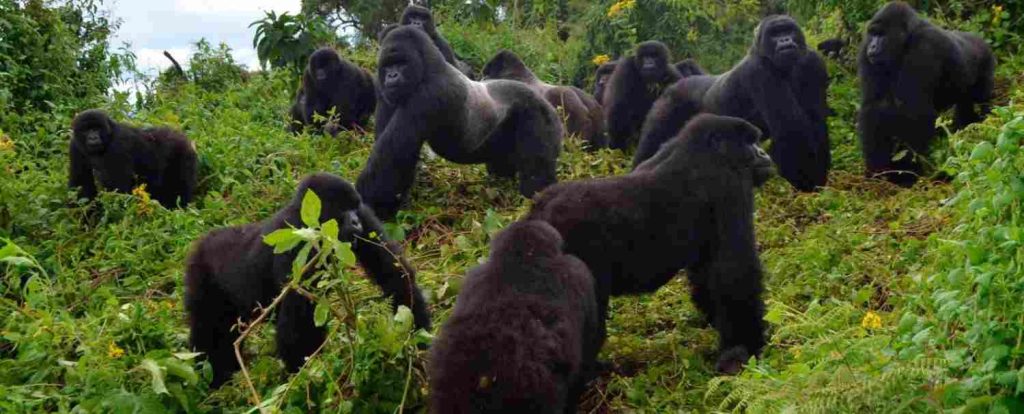
Imagine walking through the ancient rainforests of Bwindi Impenetrable National Park, guided by expert trackers who quietly follow fresh footprints and broken branches deep into the jungle. The air is cool, the forest is alive with birdsong, and every step builds anticipation.
Then, without warning, the dense vegetation parts.
A massive silverback sits calmly beneath a fig tree while young gorillas wrestle playfully nearby. Mothers cradle their infants with remarkable gentleness, and the entire family goes about its daily routine, seemingly unbothered by your presence.
For many travelers, this one-hour encounter becomes the highlight of a lifetime.
But what if you could spend not just one hour, but four incredible hours with these magnificent primates? What if you could join researchers and conservationists as they slowly introduce a wild gorilla family to human presence and witness conservation in action?
That is the difference between gorilla trekking and the Gorilla Habituation Experience.
Both experiences rank among the world’s greatest wildlife encounters. Both take place in Uganda’s breathtaking rainforests. Yet they offer completely different perspectives on mountain gorillas and their remarkable world.
If you’re trying to decide which adventure deserves a place on your itinerary, this guide will help you choose the experience that best matches your travel style, interests, and expectations.
Understanding Gorilla Trekking
Gorilla trekking is Uganda’s most famous wildlife activity and one of Africa’s most sought-after safari experiences.
The adventure begins with an early morning briefing before small groups enter the forest alongside experienced rangers and trackers. Their goal is to locate a gorilla family that has already completed the habituation process and feels comfortable around carefully managed human visitors.
Once the gorillas are found, visitors spend one unforgettable hour observing them in their natural habitat.
During that hour, you may watch a silverback protect his family, juveniles chase each other through the undergrowth, or mothers nurture their young with incredible care. The experience feels intimate, emotional, and profoundly humbling.
For many first-time visitors to Uganda, gorilla trekking represents the ultimate bucket-list adventure.
What Is the Gorilla Habituation Experience?
The Gorilla Habituation Experience offers something even more immersive.
Instead of visiting a gorilla family that already welcomes tourists, participants join researchers, trackers, veterinarians, and conservation teams working with gorillas that are still becoming accustomed to human presence.
This gradual process, known as habituation, can take several years.
Unlike standard trekking, visitors spend up to four hours with the gorillas once they are located. That extra time transforms the encounter into something far deeper than a wildlife viewing activity.
You don’t simply observe the gorillas, you witness the science, patience, and dedication required to protect one of the world’s most endangered species.
Because only a handful of permits are issued each day, the Gorilla Habituation Experience remains one of Africa’s most exclusive wildlife adventures.
Gorilla Trekking vs Gorilla Habituation: What’s the Difference?
At first glance, the obvious difference appears to be time.
Gorilla trekking allows one hour with a fully habituated family, while the Gorilla Habituation Experience offers up to four hours with gorillas still undergoing habituation.
However, the real distinction goes much deeper.
Gorilla trekking focuses on observation. Visitors enjoy a carefully managed encounter before leaving the forest.
The Gorilla Habituation Experience emphasizes participation. Guests accompany researchers throughout the day and gain firsthand insight into conservation work, gorilla behavior, and the challenges of protecting these incredible primates.
For travelers seeking a deeper understanding of mountain gorillas, habituation provides an experience few people in the world will ever have.
What Does Gorilla Habituation Mean?
Habituation is the careful process of helping wild mountain gorillas become comfortable with the presence of researchers and visitors without changing their natural behavior.
When gorillas first encounter humans, they often react with fear or aggression. Over several years, conservation teams gradually introduced controlled human interaction until the animals remained relaxed during observation.
The process demands patience, consistency, and strict ethical guidelines.
Every visit contributes valuable support to long-term conservation while allowing researchers to monitor gorilla health, behavior, and family dynamics.
Participating in the Gorilla Habituation Experience offers a rare opportunity to witness this remarkable work firsthand.
Why Uganda Is the Only Place to Experience Gorilla Habituation
Mountain gorillas live in protected areas across Uganda, Rwanda, and the Democratic Republic of Congo.
However, the full Gorilla Habituation Experience is available only in Uganda.
Selected gorilla families in Bwindi Impenetrable National Park continue the habituation process under the supervision of conservation experts. This unique program gives visitors access to an experience unavailable anywhere else in the world.
For wildlife enthusiasts and conservation-minded travelers, Uganda offers an opportunity that cannot be replicated.
Gorilla Trekking: The Classic Once-in-a-Lifetime Experience
There is a reason gorilla trekking consistently ranks among Africa’s greatest wildlife adventures.
Every trek feels different.
Some groups locate their gorilla family after a short walk, while others spend several hours hiking through steep valleys and dense rainforest before hearing the first distant calls.
The anticipation only adds to the excitement.
Then comes the reward.
Standing quietly just meters from a wild gorilla family creates an emotional connection that words rarely capture. Watching these intelligent primates interact with one another reminds visitors how closely connected humans and gorillas truly are.
Even though the visit lasts only one hour, the memories often last forever.
Gorilla Habituation: A Deeper and More Personal Encounter
For travelers who want more than a brief encounter, the Gorilla Habituation Experience offers extraordinary depth.
Four hours provide enough time to notice subtle social interactions, observe feeding patterns, and appreciate individual personalities within the family.
Researchers explain vocal communication, hierarchy, movement patterns, and daily routines as they unfold naturally around you.
The experience feels less like tourism and more like participating in active conservation.
Wildlife photographers especially value the additional time, allowing them to wait for changing light, capture behavioral moments, and create truly exceptional images.
Which Experience Is Better for Photography?
Photography enthusiasts often ask which option delivers better opportunities.
Gorilla trekking certainly offers incredible portraits and memorable wildlife images. However, the one-hour limit means photographers must work quickly.
The Gorilla Habituation Experience provides a significant advantage.
With four hours available, photographers can slow down and focus on storytelling rather than rushing for a single shot.
The extra time makes it possible to capture:
- Natural family interactions
- Feeding behavior
- Playful juveniles
- Grooming sessions
- Movement through the forest
- Changing light conditions
- Emotional expressions and social bonds
For serious wildlife photography, habituation offers unmatched creative freedom.
Which Experience Is More Physically Demanding?
Both activities involve hiking through rugged rainforest terrain.
However, gorilla habituation often requires longer distances because the gorillas are still less predictable in their movements.
Participants should prepare for:
- Steeper slopes
- Longer trekking times
- Dense vegetation
- Extended periods in the forest
Reasonable fitness is helpful, but experienced guides and optional porters support visitors throughout the journey.
The effort becomes insignificant once the gorillas appear.
How Your Visit Supports Gorilla Conservation
Whether you choose gorilla trekking or the Gorilla Habituation Experience, your permit directly contributes to conservation.
Tourism revenue funds critical initiatives, including:
- Anti-poaching patrols
- Ranger salaries
- Veterinary care
- Scientific research
- Habitat protection
- Community development
- Education programs
These investments have helped mountain gorilla populations recover and demonstrate how responsible tourism can protect endangered wildlife while supporting local communities.
Every permit purchased becomes part of that success story.
Best time to visit Uganda for gorilla trekking
Extend Your Safari Beyond Gorillas
Many visitors arrive in Uganda for gorillas and discover an entire country filled with extraordinary wildlife.
Chimpanzee tracking in Kibale Forest offers close encounters with our closest living relatives.
Queen Elizabeth National Park combines classic game drives with tree-climbing lions, elephants, hippos, and unforgettable boat safaris.
Murchison Falls National Park showcases the mighty Nile River squeezing through one of the world’s most powerful waterfalls before flowing into expansive savannah landscapes.
With more than 1,000 bird species, Uganda also ranks among Africa’s top birdwatching destinations.
Combining these experiences transforms a gorilla trek into a complete wildlife adventure.
Pair Uganda with Kenya and Tanzania
Many travelers extend their journey beyond Uganda to experience East Africa’s legendary safari destinations.
After the intimacy of Bwindi’s rainforest, Kenya’s Masai Mara introduces endless golden plains, Big Five encounters, luxury camps, and the Great Migration.
Tanzania adds another layer with the Serengeti, Ngorongoro Crater, Tarangire’s elephant herds, and ancient baobab landscapes.
Moving from rainforest to savannah creates one of the most diverse safari experiences available anywhere in Africa.
Gorilla Trekking or Gorilla Habituation: Which Should You Choose?
Choose gorilla trekking if you:
- Want the classic bucket-list experience
- Have limited time
- Prefer a shorter forest adventure
- Plan to combine multiple safari destinations
Choose the Gorilla Habituation Experience if you:
- Want more time with gorillas
- Love wildlife photography
- Enjoy conservation-focused travel
- Seek one of Africa’s most exclusive experiences
If your schedule allows, combining both experiences offers the most complete understanding of mountain gorillas and their extraordinary world.
Why Travelers Choose The Gorilla Essence
Planning the perfect gorilla safari requires more than booking a permit.
Choosing the right trekking sector, selecting suitable accommodation, and building an itinerary that flows naturally can dramatically improve your experience.
At The Gorilla Essence, we specialize in tailor-made safaris that combine gorilla trekking, gorilla habituation, chimpanzee tracking, wildlife safaris, and luxury travel across Uganda, Kenya, and Tanzania.
Our local expertise allows us to match every traveler with the ideal route, accommodation, and experience while handling every logistical detail with care.
Whether your dream involves four immersive hours with a habituating gorilla family or an extended East African safari that includes the Serengeti and Masai Mara, we create journeys designed around your interests rather than standard packages.
our tip
Choosing between gorilla trekking and the Gorilla Habituation Experience is not about deciding which is better. It is about deciding which story you want to tell.
Gorilla trekking delivers an unforgettable hour with one of the world’s most endangered primates and remains one of Africa’s greatest wildlife experiences.
The Gorilla Habituation Experience goes further, inviting you into the ongoing work of conservation and offering rare insight into the lives of gorillas that are still learning to trust human observers.
Whichever path you choose, the reward is the same: an extraordinary encounter that changes the way you see wildlife, conservation, and the natural world.
And for those who want the ultimate adventure, combining both experiences creates one of the richest and most meaningful wildlife journeys available anywhere on Earth.