
Bwindi and Mgahinga
Uganda gorilla trekking: the complete guide
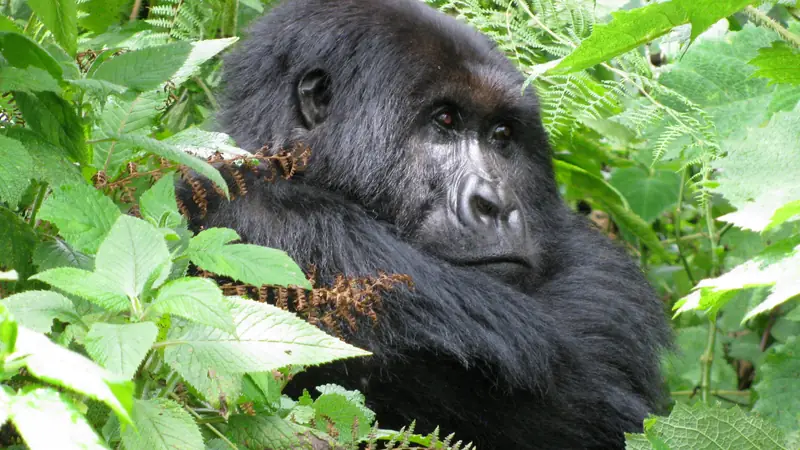
Uganda gorilla trekking takes you into the forests of Bwindi and Mgahinga to spend one hour with a wild mountain gorilla family. Uganda protects almost half of the world's mountain gorillas, so it offers more families, sectors and trip styles than anywhere else. This guide explains how permits work, which park suits you, when to go and what a trek day feels like.
Uganda gorilla trekking at a glance
Uganda gorilla trekking is a guided walk into a protected forest to meet a habituated mountain gorilla family. You spend one hour with the group. Each family receives no more than eight visitors a day. In short, it is a small, calm and carefully managed encounter.
The quick facts below come from the Uganda Wildlife Authority conservation tariff and from park and conservation sources. We last checked them on 18 October 2026.
| Question | Short answer |
|---|---|
| Where | Bwindi Impenetrable National Park and Mgahinga Gorilla National Park, south-western Uganda. |
| Time with the gorillas | One hour per family per day. |
| Visitors per family | Eight at most. |
| Minimum age | 15 years. |
| Viewing distance | 10 metres is the park rule. Gorillas may still come closer on their own. |
| Typical walk | Often two to six hours in total. Sometimes it takes most of a day. |
| Who sells permits | Licensed tour operators, for visitors from outside East Africa. |
| Best months | June to September and December to February are drier. You can trek in every month. |
Read on for the full picture. First you will learn how a trek works. Then we cover the parks, the permit process, the seasons, fitness, safety and packing.
What gorilla trekking in Uganda actually involves
Gorilla trekking or gorilla tracking?
Both words describe Uganda gorilla trekking. The park authority uses "gorilla tracking", while most travellers say "gorilla trekking". Either way, you follow rangers and trackers through the forest until you find a gorilla family.
A wild encounter, not a zoo visit
Mountain gorillas live free in the forest. They move every day, so nobody can promise where they will be. Trackers therefore leave before you, find the family's fresh trail and guide the group to them. As a result, the length of your walk changes from day to day.
Why only one hour?
The hour limit protects the gorillas. Humans can pass on colds and other illnesses, and gorillas have little resistance to them. For that reason the rules also limit group size and keep your distance fixed. Because of these limits, each family gets quiet days and you get an unhurried hour.
Where to go: Bwindi or Mgahinga for gorilla trekking
Uganda has two gorilla parks. Both lie in the far south-west, close to the borders with Rwanda and the Democratic Republic of Congo. Which one suits your Uganda gorilla trekking plans depends on how many options you want and how you travel.
| Bwindi Impenetrable National Park | Mgahinga Gorilla National Park | |
|---|---|---|
| Size and setting | About 321 km² of dense, ancient forest. UNESCO listed it in 1994. | About 33.7 km², the smallest national park in Uganda. Three extinct volcanoes rise above it. |
| Altitude | 1,160 to 2,607 metres. | 2,227 to 4,127 metres. |
| Gorilla families | Around 20 habituated families across four sectors. | One habituated family, called Nyakagezi. |
| Choice and lodging | The widest choice of sectors, families and lodges. | Fewer lodges and a quieter feel. |
| Extras | Birding, forest walks and Batwa cultural visits. | Golden monkeys, volcano hikes and Batwa cultural visits. |
Bwindi Impenetrable National Park
Bwindi shelters almost half of the world's mountain gorillas, according to UNESCO. It also protects hundreds of bird species, many butterflies and ancient trees. Most visitors choose Bwindi for Uganda gorilla trekking because of its choice of sectors.
Mgahinga Gorilla National Park
Mgahinga sits on the Virunga volcanoes. The park also protects the endangered golden monkey. Because it has one gorilla family, its trekking days depend on where that family travels. Even so, it rewards visitors who like quiet and big views.
Bwindi's four sectors at a glance
Bwindi has four trekking sectors, each with its own trailhead and gorilla families. Your permit names your sector, so choose it with care. Moreover, the sector decides your journey, your lodge area and the kind of terrain you will walk.
| Sector | Where | Character | Suits |
|---|---|---|---|
| Buhoma | North | The oldest tourism sector, with the most lodges. Terrain is varied and often the most forgiving. | First-time trekkers and mixed-ability groups. |
| Ruhija | East | Higher and cooler, with strong birding. Trails can be moderate to hard. | Birders and keen walkers. |
| Rushaga | South | The sector with the most gorilla families. Terrain varies from moderate to steep. | Travellers who want choice, and the habituation experience. |
| Nkuringo | South | Steep valleys with a descent and a climb back up. Views reach the volcanoes. | Fit trekkers who enjoy a challenge. |
Distances matter too. Buhoma and Ruhija lie about an hour apart by road. Buhoma to Rushaga or Nkuringo takes roughly three to four hours. Therefore we plan one sector per trek and avoid long transfers on trek days.
Not sure which dates suit you? Send them to us and a named member of our team will check.
How gorilla families are assigned
A gorilla family is a stable group led by a dominant silverback. It also includes females, juveniles and infants. Park rangers allocate visitors to families on the morning of the trek. In general, they consider each person's fitness and any preference you share.
So tell your guide honestly how you walk. If you have a bad knee or little time, say so at the briefing. Equally, if you want a harder, longer trek, ask for it. Our guide to Uganda's gorilla families explains each group, and group names and numbers change over time as families split or merge.
How permits work in Uganda
Every visitor needs a permit for a specific date and sector. The permit is the most important part of Uganda gorilla trekking, because there are only so many each day. Our full guide to gorilla permit booking covers the process in detail.
Who sells gorilla permits?
The Uganda Wildlife Authority issues them. According to its conservation tariff, visitors from outside East Africa book through licensed tour operators. Only residents and Ugandan citizens can book direct. As a licensed operator, our office books your permit once you confirm your dates.
How to book your permit
- Choose your dates. Pick two or three options if you can.
- Send us your names. Names must match each passport exactly.
- We reserve the permit. Our office handles the booking and confirms in writing.
- Plan flights last. Buy flights only after your permit date is confirmed.
Changes and refunds
Terms for changing or cancelling a permit are set by the authority and by your operator. They differ, and operators describe them in different ways. The authority also charges a fine for a late reschedule. Ask us for the current terms in writing before you pay. Our page on permit costs explains how we quote.
Standard trek or a longer habituation stay?
A standard trek gives you one hour with a gorilla family that is already used to visitors. By contrast, the habituation experience lets a small group stay with a family that rangers are still getting used to people. Operators report that it lasts up to four hours and takes fewer visitors.
Rushaga is the main base for the experience. However, the exact sectors and families can change. Confirm the current rules with us before you plan around it. Our comparison of the habituation experience and standard trekking helps you decide.
In short, choose the standard trek for ease and choose the habituation experience for a longer, more active encounter. Note too that the longer stay means more walking, so it suits fit visitors.
Seasons for Uganda gorilla trekking
Uganda gorilla trekking runs in every month of the year. Nevertheless, the seasons change how the trails feel. The drier months bring firmer paths. The wetter months bring greener forest and fewer visitors.
| Months | Season | What to expect |
|---|---|---|
| December to February | Drier | Firmer trails and busy permit days. Book early. |
| March to May | Wet | Heavy showers and muddy trails. April is usually the wettest month. |
| June to September | Drier | The most popular window. Trails are firm and views are clear. |
| October to November | Wet | Rain returns. Forests are lush and quieter. |
Rain does not stop trekking. It makes the walk slower and muddier, so waterproofs and good boots matter more. Our guide to the best time to visit Uganda for gorilla trekking goes month by month. Meanwhile, ask us early about June to September and December to February, because those dates book up first.
A gorilla trek day, step by step
- Early start. You eat breakfast and drive to the sector headquarters, usually before the morning briefing.
- Ranger briefing. Rangers explain the rules and assign you to a family.
- Porters and sticks. You may hire a local porter and take a walking stick. Both help on steep ground.
- The walk. You follow the guide and the trackers. The route can be flat, steep or muddy.
- Meeting the gorillas. The guide stops you at the family. You leave bags behind and keep your distance.
- Your hour. You watch, listen and photograph without flash. Time is counted from the first sighting.
- The return. You walk back, collect a certificate at some headquarters and head to your lodge.
Most people are back by early afternoon. However, a long trek can run into the evening, so plan the rest of the day with care. After the hour, many visitors describe a quiet, emotional afternoon.
Fitness and the walk
You need to be able to walk for several hours on uneven ground. The forest is steep and often muddy, and the air is thin on the higher routes. However, you do not need to be an athlete. Many visitors trek slowly and enjoy it.
Difficulty by sector
Buhoma is often the gentlest sector, while Nkuringo is usually the hardest. Ruhija and Rushaga sit in between. Remember that the family you meet matters more than the sector name, because gorillas travel.
Porters and help on the trail
Porters carry your bag and give a hand on slopes. Hiring one also pays a local family. For visitors with limited mobility, chairs carried by porters are an option at some trailheads. Our guide to how difficult gorilla tracking is includes a simple fitness check and training tips.
Not sure which dates suit you? Send them to us and a named member of our team will check.
Is gorilla trekking in Uganda safe?
Yes, Uganda gorilla trekking is safe when you follow your guides. Habituated gorillas are calm around people, and rangers escort every group. The main risks are ordinary ones: slips on wet ground, scratches from nettles and tiredness at altitude.
Wildlife on the trail
Rangers carry equipment and know the forest well. Other forest animals, such as buffalo and elephant, live in or near the parks. Your guide manages these risks and will tell you what to do. If a gorilla charges in play or warning, stay still, crouch and look down. Never run.
Health and illness
Gorillas catch human illnesses easily. Therefore the park rules ban the trek if you have a cold or another infection. Conservation groups such as the International Gorilla Conservation Programme also recommend face masks within the viewing distance. Bring masks, because rangers often provide or ask for them.
Entry rules also change. Reports in October 2026 say Uganda dropped its yellow fever certificate requirement for entry. However, vaccination is still advised, and your airline or your next country may still ask for a certificate. Check with your travel clinic and embassy before you fly. Health and travel notices also change quickly, so read your own government's latest advice and the Ministry of Health updates before you go.
Insurance
Take travel insurance that covers medical care and evacuation. Remote parks lie far from major hospitals, so cover matters. Read our guide on rules and etiquette for the full conduct list.
Who can go: age limits, seniors and accessibility
The age limit
The minimum age for gorilla trekking in Uganda is 15 years, set by the park authority. Rangers can ask for proof, so carry passports. Younger children cannot trek gorillas. Instead, families can enjoy chimpanzee trekking or golden monkey visits where age rules differ.
Seniors
There is no upper age limit. Many visitors in their sixties and seventies trek successfully. They choose gentler sectors, walk slowly and hire porters. We match the sector to your pace.
Mobility and health conditions
Visitors with limited mobility can ask about carried chairs. Heart, lung and joint conditions deserve a doctor's advice before you book. Tell us early, because we can then suggest the right sector and families.
Rules and etiquette on a gorilla trek
The rules protect the gorillas and keep you safe. Most come straight from the conservation tariff. Your ranger will repeat them at the briefing.
- Keep the group to eight visitors at most, with one hour at the family.
- Stay 10 metres from the gorillas. If they approach, stay calm and let your guide move you back.
- Do not trek if you have a cold or another infection.
- If you must cough or sneeze, cover your face and turn away.
- Do not eat, drink or smoke near the gorillas.
- Never use flash photography.
- Take all litter out of the forest. If you need a toilet, tell your guide so waste is buried properly.
- Carry your permit and payment receipts.
Our rules and etiquette guide explains why each rule exists.
Getting to the gorillas and where to stay
Bwindi and Mgahinga are far from Entebbe. Most visitors either drive for a long day or take a short flight to a nearby airstrip and drive on. Kihihi serves the northern sector, while Kisoro serves the south. In both cases the final drive takes about an hour.
From Kigali, the road to southern Bwindi and Mgahinga is a common route, and many visitors link Rwanda and Uganda. You can read about that option in our gorilla trek from Kigali.
Lodges range from simple to luxurious. Each sector has its own lodge area, so we choose a lodge close to your trailhead to keep the morning start short. See our luxury gorilla safaris for the top end.
Sample Uganda gorilla trekking itineraries
You can build Uganda gorilla trekking into a short trip or a long safari. These trips show how. Ask for a quote on any of them, or ask us to change them to suit your dates.
- 3-day Bwindi gorilla trek. The quickest way in.
- 4-day Bwindi gorilla trekking. A rest day for easier travel.
- 3-day Mgahinga gorilla trek. A quiet park and volcano views.
- 4-day Mgahinga gorilla and golden monkey safari. Two primates in one trip.
- 5-day gorillas and game safari. Gorillas plus a savannah park.
- 5-day gorilla and chimpanzee safari. Great apes in two forests.
- 8-day Mburo, Mgahinga and Bwindi safari. A longer primate journey.
- 10-day wild Uganda safari. Gorillas, chimpanzees and big game.
You can also pair gorillas with other parks. Read our guide to Uganda's national parks for ideas.
Choosing between Uganda and Rwanda
The gorillas are the same species in both countries, and the rules are similar. The difference lies in the journey. Rwanda is closer to its capital, while Uganda offers more sectors and combinations.
| Uganda | Rwanda | |
|---|---|---|
| Parks | Bwindi and Mgahinga | Volcanoes National Park |
| Journey | A long drive or short flight to the south-west | About two to three hours by road from Kigali |
| Choice | The most sectors and families | A smaller, tightly run system |
| Add-ons | Chimpanzees, savannah parks and birding | Golden monkeys, Dian Fossey hike and Nyungwe |
Our Uganda or Rwanda comparison goes deeper, and our Rwanda gorilla trekking guide covers Volcanoes National Park.
Not sure which dates suit you? Send them to us and a named member of our team will check.
How your visit protects Uganda's gorillas
Mountain gorillas are recovering, but they remain at risk. The IUCN moved them from Critically Endangered to Endangered in 2018. The last full counts found at least 459 gorillas in the Bwindi-Sarambwe area in 2018 and 604 in the Virunga massif in 2016, about 1,063 in total, as the Dian Fossey Gorilla Fund reports. A newer Bwindi census began in 2025, and its results are still awaited.
Permit fees help pay for rangers, vets and community projects. Furthermore, local porters, guides and lodge staff earn a living from the gorillas, which gives communities a reason to protect the forest. You can learn more about the species on our mountain gorillas page. In turn, the best way to give back is to follow the rules and choose a responsible operator.
Why Uganda gorilla trekking suits so many travellers
Uganda gorilla trekking offers the widest choice of any destination. Bwindi has four sectors and Mgahinga adds a fifth option, so you can match the walk, the lodge and the budget to your needs. Uganda gorilla trekking also pairs easily with chimpanzees, big game and birding.
Visitors often ask why they should choose Uganda over a shorter trip elsewhere. The answer is variety. A single journey can include gorillas, tree-climbing lions and a boat on the Kazinga Channel. That mix makes Uganda gorilla trekking a complete safari as well as a primate encounter.
Beyond the gorillas: birds, butterflies and ancient forest
Bwindi is more than a gorilla park. UNESCO records over 347 forest bird species, 202 butterfly species and more than 200 tree species. It also holds at least 70 of the 78 bird species restricted to the Albertine Rift mountain forests. As a result, keen birders often add a rest day to their Uganda gorilla trekking plans.
Other primates share the forest. Blue monkeys, L'Hoest's monkeys and chimpanzees live here too. Rangers can sometimes point out their calls and signs on the way to the gorillas, which adds depth to Uganda gorilla trekking.
The sectors in more detail
Buhoma, the northern gateway
Buhoma has the park headquarters and the oldest tourism infrastructure. Visitors fly to the Kihihi airstrip, which lies about an hour away by road. Because of its lodges and gentler trails, Buhoma suits first-timers and mixed groups.
Ruhija, the high eastern sector
Ruhija sits higher and cooler, and its trails climb through mossy forest. Birders love it, since the altitude favours Albertine Rift species. Expect moderate to hard walks.
Rushaga, the sector with most families
Rushaga offers the greatest number of habituated families. It is also the main base for the longer habituation stay. Visitors reach it by road from Kigali through the Cyanika border, which takes about four to five hours, or by a short flight to Kisoro.
Nkuringo, the steep southern sector
Nkuringo is the hardest sector. Trails drop into valleys and climb back out, and the views reach the volcanoes across the border. Fit trekkers enjoy it, and lodges along the ridge look over the forest.
Mgahinga and the Virunga volcanoes
Mgahinga covers just 33.7 square kilometres, yet it rises from 2,227 to 4,127 metres. Three extinct volcanoes, Muhabura, Gahinga and Sabyinyo, dominate the park. Its gorilla family, Nyakagezi, sometimes crosses into neighbouring parks, so treks vary from year to year.
Golden monkeys also live here, and a bamboo-forest trek to find them makes a fine second primate day for anyone on Uganda gorilla trekking safaris. Our 4-day Mgahinga safari combines both.
Batwa culture and community visits
The Batwa are the forest's earliest inhabitants, according to the Uganda Wildlife Authority. Today they share their history through guided forest walks, storytelling and craft visits near both parks. Because the Batwa lost access to the forests when the parks were created, income from visits matters.
Ask us to choose community-run experiences that return money to Batwa families directly. Go with respect, ask before taking photographs and buy crafts at fair prices.
What to do on the days around your trek
Most trips include one trek day and one or two days of rest. Many visitors use them for forest walks, birding, village visits and the lake scenery around Kabale and Lake Bunyonyi. Others continue north to Queen Elizabeth National Park for a boat cruise and game drives.
If you travel from Kampala, a stop at Lake Mburo breaks the long road. For ideas, read our Uganda national parks guide.
Plan your Uganda gorilla trekking trip with us
We are a licensed Ugandan operator, and we buy your permit, book your lodge and guide you from arrival to departure. One named member of our team looks after your trip. You never deal with a faceless inbox.
- Tell us your dates. Send your dates and group size or message us on WhatsApp.
- We check with the park. Our office confirms your permit, normally within 24 hours.
- You get one clear quote. It lists every inclusion for your group.
Want to see more first? Browse all Uganda tours and Uganda safaris, or read our gorilla trekking updates for 2026. Our gorilla trekking FAQs answer the rest.
For combined routes that add Uganda gorilla trekking to other parks, or Uganda gorilla trekking with a Rwanda leg, see the 7-day Murchison Falls and Bwindi safari, the 7-day Queen Elizabeth safari and the 11-day Uganda and Rwanda safari.
Also read where to stay in Musanze if you cross into Rwanda, and how to choose a gorilla trekking operator.
Need the full list? See our Uganda Rwanda travel documents page for official links and a printable checklist.
More guides on this topic
Start here
- Bwindi gorilla trekking: which of the four sectors to pick. Compare Bwindi's four sectors and choose the one that fits your fitness and route.
- Buhoma gorilla trekking: what to expect in northern Bwindi. The northern sector, with the longest track record and smooth logistics.
- Ruhija gorilla trekking: the high, misty side of Bwindi. The high eastern sector, loved by birders and fit walkers.
- Rushaga gorilla trekking: the widest choice in Bwindi. The southern sector with the most choice, closest to Kigali.
- Nkuringo gorilla trekking: steep valleys and volcano views. The steep south-western sector with volcano views.
Go deeper
- Fly-in gorilla safari: trek Bwindi in three days by air. How a three-day fly-in trek works, with airstrips, baggage limits and sample timings.
- 5 day gorilla safari in Uganda: itineraries that work. Two five-day plans, a classic loop and a calmer version, with parks and permit timing.
- Where to stay in Bwindi: how to choose a lodge for your trek. Lodge styles in each Bwindi sector, and how to match your room to your permit.
- Batwa cultural experience in Uganda: meeting the forest people. Who the Batwa are, where to visit them and how to visit with respect.
- Lake Bunyonyi: a calm stop on the road to the gorillas. A calm highland lake between the border and Bwindi, ideal before or after your trek.
Specific questions
- Gorilla safari combinations in Uganda: which parks to pair with Bwindi. Which Ugandan parks to pair with Bwindi, with sample routes by number of days.
Frequently asked questions
How much time do you spend with the gorillas?
One hour per family per day. The hour starts when you first see the gorillas, and the walk to find them comes before it.
How close can you get to the gorillas?
The park rule is 10 metres. However, gorillas sometimes walk closer on their own. When that happens, your guide will move the group calmly.
Can you touch a gorilla?
No. Touching is not allowed, because gorillas catch human illnesses. If a juvenile comes close, stay still and let your guide lead the response.
What is the minimum age for gorilla trekking in Uganda?
The minimum age is 15 years. There is no upper limit, and many visitors in their sixties and seventies trek successfully.
Will I definitely see gorillas?
Sightings are very likely, because trackers locate the family before you arrive. Still, wild animals move, and nobody can guarantee the walk time.
How hard is a gorilla trek?
Most treks take two to six hours and cross steep, muddy ground. Some take most of a day. You need steady walking fitness, but not athletic training.
Is gorilla trekking in Uganda safe?
Yes, when you follow your guides. Rangers escort every group, and habituated gorillas are calm around people. The main risks are slips, nettles and tiredness.
Which is better, Bwindi or Mgahinga?
Bwindi offers more sectors, families and lodges. Mgahinga is smaller and quieter and suits visitors who also want golden monkeys and volcano views.
Can I book a gorilla permit myself?
Visitors from outside East Africa book through licensed tour operators. We reserve your permit once you confirm dates and passport names.
When should I ask for my dates?
As early as possible, especially for June to September and December to February. Those months book up first.
Do I need a porter?
No, but we recommend one. A porter carries your bag, helps on slopes and earns income for a local family.
What should I wear for gorilla trekking?
Wear waterproof boots, long trousers, a long-sleeved top and a light rain jacket. Gloves help with vines and nettles.
Can I combine gorillas with chimpanzees or other parks?
Yes. Many travellers add chimpanzee trekking at Kibale or game drives in Queen Elizabeth National Park. See our national parks guide and chimpanzee trekking page.
Do I need a yellow fever certificate for Uganda?
Reports in October 2026 say Uganda no longer requires one for entry. Vaccination is still advised, and airlines or other countries may ask for proof, so check with your travel clinic and embassy.
Ready to trek? Ask for your quote.
Keep planning