
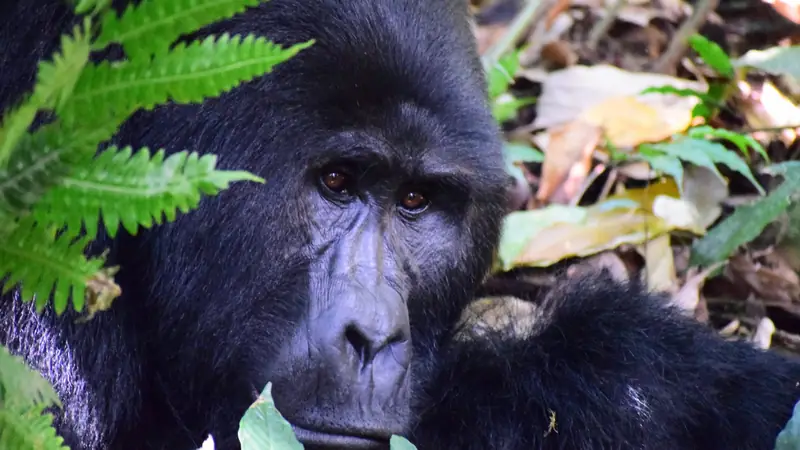
Chimpanzee site
Kyambura Gorge chimpanzee trekking: what to expect
Kyambura Gorge chimpanzee trekking takes you down into a deep forested gorge in the savannah to meet a small community of wild chimpanzees. This guide explains the walk, the sightings, the rules and how the gorge compares with Kibale.
Kyambura Gorge chimpanzee trekking: the short answer
Kyambura Gorge chimpanzee trekking is a guided forest walk into a deep, green gorge to find a small community of wild chimpanzees. You spend one hour with them if you find them. The gorge lies in the east of Queen Elizabeth National Park, and it is one of the most scenic places to see chimpanzees in Uganda.
This experience differs sharply from Kibale. Here the forest is narrow, and the walk starts with a steep descent. As a result, many visitors rate the scenery as highly as the sightings. Treks run under the Uganda Wildlife Authority, and every visitor needs a permit for the date.
Where the gorge sits and why it is special
Kyambura Gorge is a sunken forest, roughly 100 metres deep and several kilometres long, cut into the open savannah by the Kyambura River. From the rim, you see only a green crack in the grassland. Once you climb down, the world changes. Tall fig trees, ferns and hanging vines create a cool, humid forest that feels far from the plains above.
The gorge is cut off from the larger forests of western Uganda. Therefore its chimpanzees live in an island of trees surrounded by grassland. This isolation shapes the community, and it explains why the setting draws so much attention from researchers and conservation groups.
Local people sometimes call the gorge the Valley of Apes. The name suits it well. You will hear calls echo along the walls long before you spot a single animal.
How a Kyambura Gorge trek works
- Early start. Treks begin in the morning and again in the afternoon, and you check in at the ranger post near the rim.
- Briefing. A ranger explains the route, the distance rules and what to do if the chimpanzees move.
- The descent. Your group walks down steps and a steep path to the gorge floor. Trackers radio ahead.
- The hour. If trackers find the community, you stay with the chimpanzees for one hour.
- The climb out. You return the same way, uphill, at a steady pace.
Kyambura Gorge chimpanzee trekking uses small groups, with a maximum of six visitors per guide. A small group keeps noise low and helps the chimpanzees stay relaxed. The total trek usually lasts between two and four hours.
The descent and the climb: what to expect underfoot
The walk down is short, yet it is steep. Rangers have cut steps in some places, but other stretches are loose earth, roots and mud. After rain, the path turns slick. Wear boots with real grip, and use the walking stick that rangers can lend.
The climb back out is the harder half. You will be tired, warm and probably muddy, so pace yourself. Stop to drink water, and look back at the green wall behind you. Porters are a good idea for anyone who dislikes steep ground, because a steady arm helps on the way up.
A moderate fitness level is enough. You do not need athletic training, but you should be comfortable with stairs and uneven slopes. For general walking advice, see our trekking difficulty guide.
Not sure which dates suit you? Send them to us and a named member of our team will check.
Chimpanzee sightings in the gorge
Be realistic about sightings. Kyambura Gorge chimpanzee trekking carries more uncertainty than Kibale, because the Kyambura community is small, and the chimpanzees roam along the gorge floor and up its sides. In Kibale, large communities and daily tracking raise the odds. In the gorge, the group can be far from the trail on any given day.
Even so, many treks end with a good view. When trackers find the chimpanzees, they are often feeding in fig trees or travelling along the river. You may watch them groom, rest or call to each other. Rangers cannot promise a sighting, because the animals are wild and free.
If seeing chimpanzees is your top goal, plan a second trek at another site. Our chimpanzee trekking guide compares every site in Uganda, and our page on the chimpanzee habituation experience describes a longer option in Kibale.
Other wildlife you may meet in the gorge
The gorge shelters more than chimpanzees. Its forest is rich in smaller primates and birds, and these often make up for a quiet morning.
- Monkeys. Black-and-white colobus, red-tailed monkeys and baboons use the gorge walls.
- Birds. Hornbills, turacos and kingfishers call from the canopy and the river edge.
- Large mammals. Elephants, buffalo and hippos sometimes visit the river, so rangers watch the trail closely.
- Butterflies and plants. Ferns, orchids and giant figs line the path.
Birders may want to read the BirdLife International pages for Uganda's important bird areas. Bring binoculars, because the canopy hides many species.
Kyambura Gorge or Kibale for chimpanzee trekking?
Both sites offer excellent encounters, though they suit different travellers. Use this table to compare them.
| Kyambura Gorge | Kibale Forest | |
|---|---|---|
| Setting | Deep gorge in the savannah | Large continuous rainforest |
| Community size | Small | Large |
| Sighting odds | Less certain | Very good |
| Other primates | Few species | Many species |
| Scenery | Dramatic | Classic forest |
| Best for | Scenery and a safari combination | Reliable chimpanzee viewing |
Many travellers do both. Start with Kyambura Gorge chimpanzee trekking for the scenery, then add Kibale for a second, more reliable trek. Our Kibale guide covers the forest in detail.
Rules, age and group size for the gorge trek
The rules for Kyambura Gorge chimpanzee trekking match those at other chimpanzee sites. They exist to protect the animals, who catch human illnesses easily.
- Age. The minimum age for a standard chimpanzee trek is 12.
- Group size. A maximum of six visitors follow one guide.
- Distance. Keep the distance your ranger sets, about eight metres.
- Health. Do not trek if you have a cold, flu or stomach illness.
- Behaviour. Keep voices low, never use flash and do not eat near the chimpanzees.
Your permit is personal and tied to a date, so passport names must match exactly. Read our permit booking guide to see how the process works.
The best months to go
Kyambura Gorge chimpanzee trekking runs in every month. Drier months, June to September and December to February, keep the steps firmer and the path safer. In the wet months, the descent is muddy and the walk is slower, though the forest looks lush and the crowds are small.
Morning treks are cooler, and the light inside the gorge is gentle. Afternoon treks work well if you spend the morning on a game drive. For the wider seasonal picture across Uganda, read our best time to go guide.
What to wear and carry on the trail
Dress for a steep, humid forest. Light layers dry fast and keep you comfortable.
- Boots or shoes with strong grip, broken in before you travel.
- Long trousers and a long-sleeved top, to guard against nettles and insects.
- A light rain jacket, since showers can come without warning.
- Gloves for gripping vines and handrails.
- A small daypack, with water and a snack.
- Insect repellent, a hat and sunscreen for the rim.
Our full packing guide works well for this trek too.
Not sure which dates suit you? Send them to us and a named member of our team will check.
Photographing chimpanzees in a dim gorge
The gorge is shady, and chimpanzees move fast. Use a fast lens, raise your ISO and keep your shutter speed quick. A lens of 200 to 400 mm helps when animals sit high in the trees. Flash is forbidden, so practise before you travel.
Look up as often as you look ahead. Many of the best moments happen in the canopy. Also, take a few minutes to put the camera down and simply watch.
Safety on the trail
Rangers escort every group, and they carry radios. The main risks are slips, stinging nettles and tiredness. Wild animals also use the gorge, so listen closely to your guide.
If you feel unwell, tell the ranger at once. Rangers will slow the group or turn back, because safety comes first. Travel insurance that covers medical evacuation is wise, since hospitals are far from the park. Carry any personal medicines in your daypack, and drink water regularly in the humid air.
A sample day in the west
A good day links the trek with the surrounding landscape. Plan a gentle rhythm, so you arrive at the rim rested and curious.
| Time | Activity |
|---|---|
| 6:30 am | Breakfast at your lodge |
| 7:30 am | Check in at the ranger post and attend the briefing |
| 8:00 am | Descend into the gorge with your guide |
| 9:30 am | Spend one hour with the chimpanzees, if trackers find them |
| 11:30 am | Climb out and return to the lodge |
| 2:30 pm | Boat cruise or game drive |
This schedule keeps the effort in the cool morning and leaves the afternoon for easy wildlife viewing. If you prefer an afternoon trek, swap the plan, and keep the boat trip for the following morning.
Combining the gorge with a wider safari
Kyambura sits inside a park that offers far more than chimpanzees. Most visitors pair Kyambura Gorge chimpanzee trekking with a boat cruise on the Kazinga Channel and game drives across the plains. Lions in the Ishasha sector add another highlight, and our guide to tree climbing lions in Ishasha explains how to find them.
Plan the trek for the morning, then rest and take a boat trip in the afternoon. See our Kazinga Channel boat cruise guide, and the Queen Elizabeth guide for the park as a whole. Our 4-day Queen Elizabeth safari shows one route.
Conservation and the future of the gorge
Chimpanzees are listed as Endangered on the IUCN Red List. The gorge community faces extra pressure because it lives in a small, isolated forest. Farms and settlements press against the rim, so rangers and local groups work to protect the forest and maintain wildlife links.
Your visit helps. Permit fees support rangers and park operations, and visitors bring income to nearby communities. Choose lodges that employ local staff, and buy crafts from local groups. These small choices keep the gorge worth protecting.
Plan Kyambura Gorge chimpanzee trekking with us
We are a licensed Ugandan operator, and one named member of our team plans your trip. We arrange permits, lodges and transfers, and we place the trek where it fits best in your route.
- Send your dates. Tell us your dates and group size, or message us on WhatsApp.
- Pick your route. We suggest sites and timing.
- Get one clear quote. It lists everything included.
Questions? Our frequently asked questions cover the basics.
Not sure which dates suit you? Send them to us and a named member of our team will check.
Frequently asked questions
What is Kyambura Gorge chimpanzee trekking?
It is a guided walk into Kyambura Gorge, in the east of Queen Elizabeth National Park, to find a small community of wild chimpanzees. You spend one hour with them if trackers find them.
How deep is Kyambura Gorge?
The gorge is roughly 100 metres deep, so the trek begins with a steep descent and ends with a climb.
Will I see chimpanzees in Kyambura Gorge?
Sightings are possible but less certain than in Kibale, because the community is small. Rangers cannot promise a sighting.
What is the minimum age for the gorge trek?
The minimum age for a standard chimpanzee trek is 12 years.
How many people trek together?
A maximum of six visitors follow one ranger guide.
How long does the trek take?
Most treks last between two and four hours, including the hour with the chimpanzees.
Is the Kyambura Gorge trek hard?
It is moderate. The descent and the climb are steep, but you walk slowly, and porters can help.
Should I trek Kyambura or Kibale?
Choose Kyambura for scenery and a safari combination, and Kibale for the most reliable chimpanzee viewing. Many visitors do both.
Ready to trek? Ask for your quote.
Keep planning