The Complete Month-by-Month Guide
The Best Time for the Great Migration Safari is regarded as one of the determining factors that enable you to witness the greatest wildlife spectacle on Earth. Every year, more than two million wildebeest, accompanied by hundreds of thousands of zebras, gazelles, elands, and other plains game, travel across the vast ecosystems of Tanzania and Kenya in search of fresh grazing and water. This extraordinary movement creates one of Africa’s most breathtaking safari experiences, attracting wildlife enthusiasts, photographers, filmmakers, honeymooners, and adventure travelers from around the world.
Unlike what many people believe, the Great Migration is not a single event that occurred over a few weeks. It is a continuous, year-round journey driven by rainfall patterns and the search for nutritious grasslands. Every month offers a completely different safari experience, from witnessing thousands of newborn wildebeest taking their first steps on the southern Serengeti plains to watching dramatic crocodile-filled river crossings in northern Tanzania and Kenya’s Masai Mara. Understanding these seasonal movements is the key to planning the perfect safari.
Choosing the right time to visit depends entirely on the type of wildlife experience you are hoping to enjoy. Some travelers dream of photographing the legendary Mara River crossings, while others want to witness the calving season, when thousands of wildebeest give birth each day, and predators patrol the grasslands searching for easy prey. Bird lovers often prefer the lush Green Season, while photographers may seek the dramatic golden light of the Dry Season. There is no single “best” month for everyone—only the best month for your specific safari goals.
This comprehensive guide explores every stage of the Great Migration, explains how the animals move throughout the year, compares the seasons, highlights the best parks and regions to visit, and provides expert advice for planning an unforgettable African safari. Whether you are booking a luxury lodge, planning a family adventure, organizing a photographic expedition, or searching for the perfect honeymoon destination, this guide will help you choose the ideal time to experience one of nature’s greatest wonders.
Best Time for the Great Migration Safari- Understanding the Great Migration
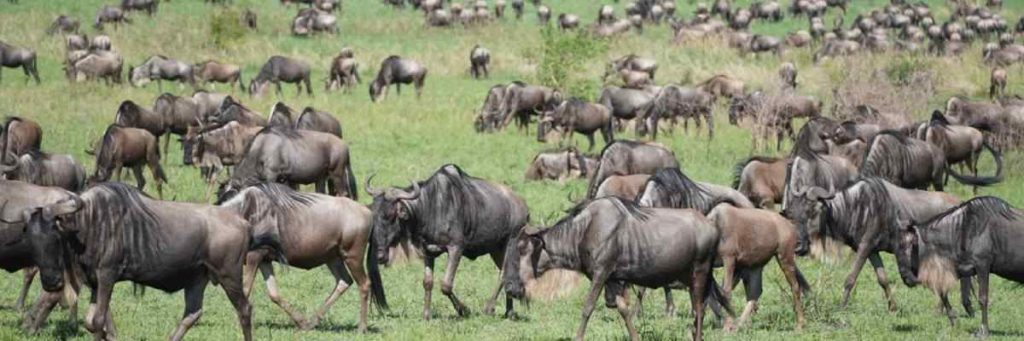
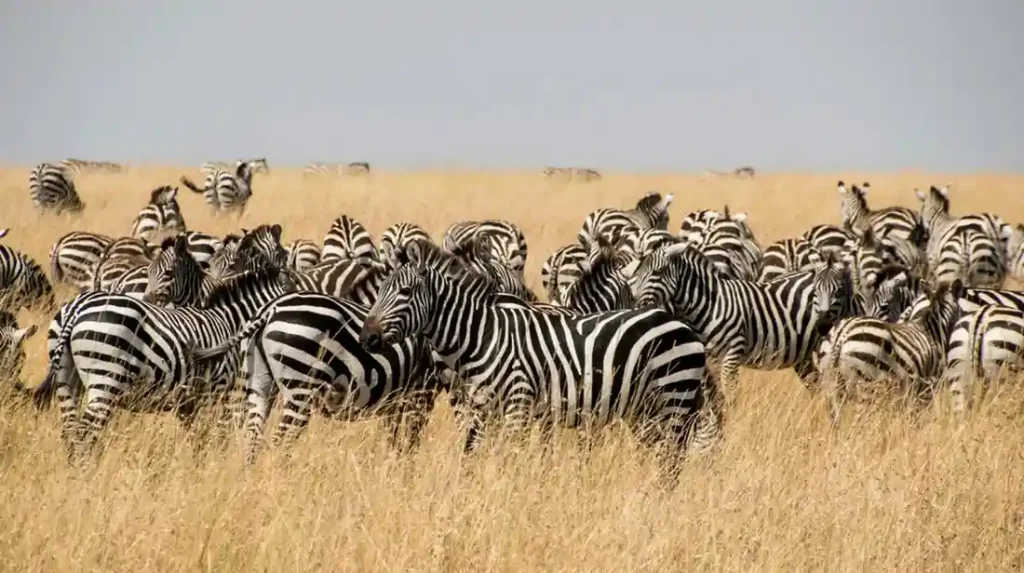
The Great Migration is the largest overland wildlife migration remaining on Earth. Each year, approximately 1.5 million blue wildebeest, over 300,000 Thomson’s gazelles, nearly 250,000 plains zebras, and thousands of topi, eland, impala, and other herbivores travel in a giant clockwise loop through Tanzania’s Serengeti ecosystem and Kenya’s Masai Mara National Reserve. The migration covers nearly 1,000 kilometers (620 miles), crossing vast open plains, woodlands, rivers, and protected conservation areas.
This incredible movement is not random. The animals follow seasonal rainfall, which produces fresh, mineral-rich grasses essential for their survival. As one region dries out, the herds instinctively move toward areas where new grass has emerged after the rains. This continuous search for food and water creates one of the most dynamic ecosystems on the planet.
The migration supports one of the richest predator populations in Africa. Lions, leopards, cheetahs, spotted hyenas, African wild dogs, crocodiles, and jackals rely heavily on the migration for food. During peak migration months, predator encounters become more frequent, creating exceptional opportunities for wildlife viewing and photography.
Scientists have spent decades studying the migration, and while its general pattern remains predictable, the exact timing changes every year depending on rainfall. Heavy rains may encourage the herds to move earlier, while delayed rainfall can keep animals in one region longer than expected. This natural variation makes every migration season unique.
Why the Great Migration Is One of the World’s Greatest Natural Wonders. Best Time for the Great Migration Safari
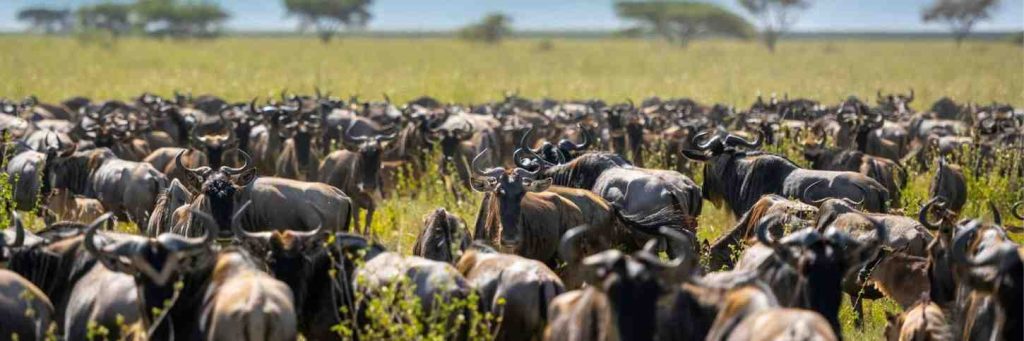
Few wildlife events compare to the scale and drama of the Great Migration. Standing in the middle of the Serengeti as tens of thousands of wildebeest stretch to the horizon is an experience that leaves a lasting impression on every visitor. The sound of pounding hooves, the dust rising into the African sky, and the constant calls of wildebeest create an atmosphere unlike anywhere else on Earth.
One of the most dramatic moments occurs during river crossings. As the migration reaches the Mara and Grumeti Rivers, the herds gather on the riverbanks, often hesitating for hours before suddenly surging into the water. Massive Nile crocodiles wait beneath the surface, while confusion, strong currents, and steep riverbanks create a breathtaking survival spectacle. Although these crossings receive global attention, they represent only one chapter in the migration story.
Equally remarkable is the calving season, when approximately half a million wildebeest calves are born within just a few weeks on the nutrient-rich plains of southern Serengeti and Ndutu. This synchronized birthing strategy overwhelms predators with sheer numbers, ensuring many calves survive despite constant danger from lions, cheetahs, hyenas, and jackals.
The migration also plays a vital ecological role. Millions of grazing animals fertilize the soil, disperse seeds, maintain healthy grasslands, and support countless species throughout the Serengeti-Mara ecosystem. Without this annual movement, the ecological balance of East Africa would be profoundly different.
Where Does the Great Migration Take Place? Best Time for the Great Migration Safari
The migration occurs within the Greater Serengeti Ecosystem, one of Africa’s largest protected landscapes. Although many travelers associate the migration only with the Serengeti National Park and Kenya’s Masai Mara National Reserve, the animals actually move through several protected areas across northern Tanzania and southwestern Kenya.
The journey begins on the southern plains of Serengeti National Park and the Ndutu Conservation Area, where fertile volcanic soils provide ideal conditions for calving. As seasonal rains diminish, the herds gradually move northwest through Central Serengeti before continuing toward the Western Corridor, where they face the Grumeti River.
By mid-year, the migration reaches Northern Serengeti, famous for the dramatic Mara River crossings. Some herds remain in Tanzania, while others cross into Kenya’s Masai Mara National Reserve, where lush grasslands provide abundant grazing during the dry season. Later in the year, as the short rains begin in Tanzania, the animals gradually return south, completing one of the world’s greatest natural cycles.
Because the migration spans such an enormous area, choosing the correct safari location is just as important as choosing the right month. Travelers who understand the migration’s seasonal movements greatly increase their chances of witnessing unforgettable wildlife encounters.
Why There Is No Single Best Time for the Great Migration Safari
Many travel websites claim that one specific month is the best time to experience the Great Migration. In reality, every season offers something unique, making the ideal travel period dependent on your personal interests.
If your dream is to witness dramatic river crossings filled with tension and excitement, the dry months of July through October are generally the best choice. These months bring spectacular crossings at the Mara River and exceptional predator activity as lions, crocodiles, and hyenas capitalize on vulnerable herds.
Travelers interested in newborn wildlife should instead visit between late January and March, when hundreds of thousands of wildebeest calves are born on the southern Serengeti plains. This period offers extraordinary opportunities to observe maternal behavior, predator-prey interactions, and lush green landscapes.
Photographers often appreciate the Green Season because dramatic storm clouds, vibrant grasslands, fewer safari vehicles, and softer natural light create outstanding photographic conditions. Birdwatchers also favor this period as migratory bird species arrive from Europe and Asia, transforming the Serengeti into one of Africa’s premier birding destinations.
Budget-conscious travelers can often find better accommodation rates during the shoulder and Green Seasons while still enjoying exceptional wildlife viewing. Luxury safari travelers, meanwhile, frequently plan their journeys around peak migration events despite higher prices due to increased demand.
The beauty of the Great Migration lies in its constant movement. Every month tells a different chapter of the story, ensuring that no two safaris are ever exactly alike.
The Great Migration at a Glance- Best Time for the Great Migration Safari
Before exploring the migration month by month, it helps to understand the overall annual cycle.
From January to March, the herds gather in Southern Serengeti and Ndutu, where calving season reaches its peak. This is one of the best periods for predator sightings and wildlife photography.
Between April and May, the long rains encourage the migration to move northward through Central Serengeti. Vast columns of wildebeest begin forming, creating spectacular landscapes of moving wildlife.
During June, many herds reach the Western Corridor, where they encounter the Grumeti River and continue their gradual journey toward northern Tanzania.
From July through October, the migration reaches Northern Serengeti and Kenya’s Masai Mara. This is the famous river crossing season, offering some of the most dramatic wildlife spectacles in Africa.
Finally, November and December bring the short rains to Tanzania. Fresh grass emerges across the southern plains, prompting the herds to begin their long journey back toward Ndutu and Southern Serengeti, completing the annual migration cycle.
Understanding this continuous movement is the foundation for planning the perfect safari. In the next section, we explore every month of the year in detail, beginning with January and February, when the Serengeti comes alive with thousands of newborn wildebeest and intense predator activity.
I’ll continue the same premium pillar article. This section is designed to seamlessly follow Part 1 while maintaining excellent SEO structure, readability, and engaging, conversion-focused content.
January: Calving Season Begins on the Southern Serengeti Plains
January marks the beginning of one of the most exciting periods in the Great Migration calendar. Following the short rains of November and December, the southern Serengeti plains and the Ndutu region transform into a lush, emerald-green landscape covered with nutrient-rich grasses. Millions of wildebeest, zebras, gazelles, and other herbivores gather across these fertile plains, preparing for the remarkable calving season that will soon reach its peak.
The herds are generally concentrated around the Ndutu area, Kusini Plains, and the southern Serengeti. This concentration of wildlife creates one of the highest animal densities found anywhere in Africa. Visitors often witness endless horizons filled with grazing animals, making January an exceptional month for first-time safari travelers and wildlife photographers alike.
Although thousands of calves are already being born, the main birthing period typically accelerates toward late January and continues into February. Female wildebeest instinctively synchronize their pregnancies so that an astonishing number of calves arrive within a relatively short period. This natural strategy improves survival rates because predators can only capture a small fraction of the newborns despite the overwhelming abundance of vulnerable prey.
January also offers outstanding predator sightings. Lions establish territories across the open plains, cheetahs patrol the grasslands searching for isolated calves, spotted hyenas roam both day and night, while jackals take advantage of afterbirth and weak newborns. Leopards, although less frequently seen in the open plains, can often be found in nearby woodlands and riverine forests.
Weather conditions during January are generally warm, with occasional afternoon showers that refresh the landscape without significantly disrupting safari activities. The clear mornings and dramatic cloud formations create spectacular photographic conditions, especially during sunrise and sunset.
For photographers, January provides an extraordinary combination of lush landscapes, newborn wildlife, active predators, and beautiful natural lighting. Green grass contrasts beautifully with the golden coats of lions, the black-and-white stripes of zebras, and the distinctive markings of wildebeest calves, creating unforgettable images.
Travelers seeking quieter safari experiences will also appreciate that January is often less crowded than the peak river crossing season later in the year. Although popular lodges book well in advance, safari vehicles are generally more dispersed throughout the southern Serengeti ecosystem.
Why Visit in January?- Best Time for the Great Migration Safari
January is one of the finest months for travelers who want to experience abundant wildlife without the larger crowds associated with river crossing season. Families, honeymoon couples, wildlife enthusiasts, and photographers all find exceptional value during this period.
The combination of beautiful green scenery, active predators, and thousands of newborn animals creates a safari atmosphere filled with constant excitement. Every game drive offers the possibility of witnessing dramatic hunting behavior, tender maternal care, or playful young animals exploring their environment for the first time.
February: Peak Wildebeest Calving Season
February is widely regarded by safari experts as one of the greatest wildlife viewing months in Africa. During this remarkable period, approximately 500,000 wildebeest calves are born within just two to three weeks across the southern Serengeti and Ndutu plains.
This synchronized birthing event represents one of nature’s most extraordinary survival strategies. Thousands of calves are born every single day, with many standing and walking within minutes of birth. Within hours, newborn wildebeest are capable of running alongside the migrating herds, an essential adaptation in an ecosystem dominated by predators.
The incredible abundance of vulnerable calves attracts one of the highest concentrations of predators anywhere on the African continent. Lions become particularly active as they target inexperienced young animals, while cheetahs rely on their incredible speed to pursue calves separated from their mothers. Hyenas patrol continuously, often competing with lions over fresh kills, while black-backed jackals search for opportunities among the massive herds.
Despite the intense predator activity, the vast majority of calves survive due to the sheer number born during this short period. This remarkable balance between predator and prey has evolved over thousands of years and represents one of the Serengeti ecosystem’s defining natural processes.
February also provides outstanding opportunities for wildlife photographers. Images of newborn calves taking their first steps, protective mothers nursing their young, and dramatic predator encounters are among the most sought-after safari photographs in the world.
Birdwatchers should not overlook February either. Numerous migratory bird species from Europe and Asia remain in East Africa during this season, joining resident birds to create exceptional birding opportunities throughout the Serengeti ecosystem.
Why February Is Considered One of the Best Months for Safari
If your goal is to witness the circle of life unfold before your eyes, February is difficult to surpass. Every game drive presents a different story, from birth and nurturing to survival and predation.
Unlike the famous river crossings, which depend on unpredictable herd movements, the calving season occurs with remarkable consistency. This reliability makes February one of the safest choices for travelers hoping to experience a defining Great Migration event.
March: The Green Season Continues-Best Time for the Great Migration Safari
March marks the final stage of the calving season while maintaining many of the excellent wildlife viewing opportunities that began in January and February. The southern Serengeti remains lush and vibrant, with countless young animals now growing stronger and more adventurous.
By March, many wildebeest calves are several weeks old and capable of keeping pace with the adult herds. Although the main birthing period has concluded, predator activity remains exceptionally high as lions, hyenas, cheetahs, and leopards continue taking advantage of the abundance of inexperienced young animals.
The landscape during March is particularly beautiful. Seasonal rains sustain healthy grasslands, wildflowers bloom across portions of the plains, and dramatic thunderclouds often build during the afternoon, creating breathtaking photographic opportunities. Morning game drives frequently begin beneath crystal-clear skies before evolving into spectacular weather scenes later in the day.
March is especially attractive for photographers seeking vibrant colors rather than the dusty golden landscapes typical of the Dry Season. Rich green vegetation, reflective water pools, and moody skies combine to produce striking compositions throughout the day.
Safari travelers during March also benefit from relatively moderate visitor numbers. While wildlife remains extraordinary, many tourists delay their trips until the famous river crossing months, allowing March visitors to enjoy a more peaceful wilderness experience.
Accommodation prices may also become slightly more competitive toward the end of the month, providing excellent value for luxury safari experiences without compromising wildlife quality.
Why March Is an Excellent Choice- Best Time for the Great Migration Safari
March offers one of the best combinations of outstanding wildlife, fewer crowds, beautiful landscapes, and excellent photography conditions. Travelers who appreciate a slower-paced safari with exceptional biodiversity often consider March one of the Serengeti’s hidden gems.
April: The Great Journey North Begins
April signals the beginning of a major transition in the Great Migration. As the long rainy season becomes established across much of northern Tanzania, the enormous herds gradually leave the southern plains and begin moving northwest toward Central Serengeti.
This movement marks the start of one of the migration’s most visually impressive phases. Rather than remaining scattered across open grasslands, wildebeest begin forming long columns that may stretch for several kilometers. Watching these endless lines of animals moving purposefully across the landscape is an unforgettable safari experience.
The exact timing of this movement depends largely on rainfall patterns. Some years, herds begin migrating earlier, while in wetter seasons they may remain on the southern plains for longer. Experienced safari guides closely monitor rainfall and herd locations to maximize wildlife viewing opportunities.
Although April receives more rainfall than previous months, game drives continue throughout the Serengeti. Rain often falls in heavy but relatively short afternoon showers, leaving mornings available for excellent wildlife viewing. The fresh rain also creates stunning scenery, replenishing rivers, wetlands, and seasonal waterholes.
Predator sightings remain rewarding during April. Lions accompany the migrating herds, while hyenas and leopards continue exploiting the abundance of prey. Elephants, buffaloes, giraffes, and numerous antelope species are frequently encountered throughout Central Serengeti as wildlife disperses across the expanding green landscape.
April is also one of the best months for travelers seeking exceptional value. Because it falls within the traditional Green Season, many luxury safari lodges and tented camps offer attractive discounted rates. Visitors often enjoy premium accommodations at significantly lower prices than during peak migration months.
Why Consider an April Safari? -Best Time for the Great Migration Safari
Many travelers mistakenly overlook April because of the seasonal rains. In reality, this month offers remarkable scenery, outstanding wildlife densities, lower visitor numbers, attractive safari pricing, and one of the most authentic wilderness experiences available in East Africa.
For photographers, birdwatchers, returning safari enthusiasts, and travelers seeking luxury experiences at better value, April represents one of the Serengeti’s most rewarding hidden seasons.
As the migration continues moving northwest, the next chapter becomes even more dramatic. Vast herds begin approaching the Western Corridor, where the famous Grumeti River awaits, setting the stage for one of Africa’s most thrilling wildlife spectacles.
May: The Great Trek Through the Central Serengeti
May is one of the most underrated months to witness the Great Migration. While many travelers focus on the famous river crossings later in the year, May offers something equally extraordinary—massive columns of wildebeest stretching across the Serengeti as the migration gains momentum toward the Western Corridor.
By this stage, the lush southern plains have begun to dry, encouraging more than 1.5 million wildebeest, hundreds of thousands of zebras, and numerous gazelles to continue their annual journey. The herds gradually leave the Ndutu region behind and move through the Moru Kopjes and Central Serengeti before heading northwest.
One of the defining features of May is the formation of enormous migration columns. Rather than scattered grazing groups, visitors witness continuous lines of animals marching across the plains for kilometers. These dramatic scenes are among the most iconic images of the Great Migration and provide breathtaking opportunities for wildlife photography.
The landscape remains beautifully green thanks to the long rains, although showers gradually become less frequent toward the end of the month. Morning game drives are often cool and refreshing, while afternoons become warmer as the dry season slowly approaches.
Predator activity remains outstanding. Lions closely shadow the migration, knowing the enormous herds provide endless hunting opportunities. Spotted hyenas patrol migration routes, while cheetahs exploit open grasslands where their incredible speed gives them an advantage. Leopards remain active in woodland areas and along seasonal rivers.
May is also an exceptional month for elephant sightings. Large breeding herds move comfortably through Central Serengeti, taking advantage of plentiful vegetation and abundant water sources. Buffaloes, giraffes, topi, hartebeest, and elands are also commonly encountered during daily game drives.
Birdlife continues to impress, with wetlands and seasonal pools attracting storks, crowned cranes, secretary birds, herons, eagles, and numerous other resident and migratory species.
Perhaps one of May’s greatest advantages is its tranquility. Visitor numbers remain relatively low compared to the peak safari season, allowing guests to enjoy uncrowded wildlife sightings and more intimate safari experiences.
Why May Is a Hidden Safari Treasure
Travelers seeking authentic wilderness experiences often rank May among their favorite safari months. Wildlife is abundant, landscapes remain spectacularly green, accommodation prices are generally lower than during peak season, and safari vehicles rarely compete for viewing positions.
Luxury safari camps frequently offer attractive seasonal promotions during May, making it one of the best months for travelers looking to experience premium lodges at exceptional value.
June: Arrival at the Western Corridor and the Grumeti River
June marks the official beginning of the dry season and introduces one of the migration’s most dramatic chapters. As rainfall decreases, the enormous herds continue northwest into the Western Corridor of Serengeti National Park, where they encounter the formidable Grumeti River.
Unlike the more famous Mara River, the Grumeti River crossings are generally smaller in scale but equally fascinating. Massive Nile crocodiles inhabit these waters year-round, patiently waiting for the migration to arrive. While not every herd crosses the river simultaneously, witnessing thousands of wildebeest cautiously entering crocodile-infested waters remains an unforgettable safari experience.
The exact timing of Grumeti River crossings varies depending on rainfall patterns and herd movements. Some groups may cross early in June, while others linger nearby for days or even weeks before attempting the dangerous journey.
June’s dry weather significantly improves game viewing conditions. Vegetation becomes shorter, making wildlife easier to spot across the plains and woodlands. Dust begins replacing the lush greenery of previous months, creating the classic golden Serengeti landscapes featured in countless wildlife documentaries.
Predators continue taking advantage of migration movements. Lions establish territories near key crossing points, while crocodiles become increasingly active as herds gather along riverbanks. Hyenas follow migration routes closely, scavenging and hunting whenever opportunities arise.
June also offers excellent photographic conditions. Clear blue skies, crisp morning light, and golden afternoon landscapes combine to create ideal wildlife photography opportunities. Dust kicked up by moving herds adds atmosphere and drama to wide-angle migration scenes.
Tourism begins increasing during June as international travelers arrive for the approaching peak migration season. However, safari experiences remain considerably less crowded than during July and August.
Why Visit During June? Best Time for the Great Migration Safari
June offers an excellent balance between outstanding wildlife viewing and manageable visitor numbers. Travelers enjoy pleasant weather, exceptional game viewing, the possibility of witnessing Grumeti River crossings, and comfortable safari conditions throughout northern Tanzania.
It is also an ideal month for walking safaris and hot air balloon experiences, thanks to cool mornings and stable weather conditions.
July: Northern Serengeti Comes Alive
July is widely considered one of the finest months for a Great Migration safari. By now, the leading herds have reached Northern Serengeti, where one of nature’s greatest spectacles unfolds—the legendary Mara River crossings.
The Mara River represents one of the most dangerous obstacles faced during the migration. Strong currents, steep riverbanks, hidden rocks, and enormous Nile crocodiles create a deadly challenge for migrating animals. Yet despite these dangers, survival depends on reaching the greener grazing lands beyond the river.
River crossings are unpredictable. Herds may gather nervously on the riverbank for several hours or even days before suddenly plunging into the water in a dramatic burst of movement. This uncertainty is precisely what makes witnessing a crossing so thrilling.
Thousands of wildebeest leap into the river almost simultaneously, creating scenes of confusion, determination, and survival. Zebras closely follow, while crocodiles seize opportunities beneath the surface. Some animals successfully reach the opposite bank, while others are swept downstream by powerful currents.
The Northern Serengeti also offers exceptional resident wildlife beyond the migration itself. Lions, elephants, buffaloes, giraffes, leopards, and hyenas thrive throughout this beautiful region, ensuring outstanding game viewing even between migration sightings.
Weather during July is typically dry, sunny, and pleasantly cool during mornings and evenings. These conditions are ideal for full-day game drives, photography, and extended wildlife viewing sessions.
Accommodation demand increases significantly during July, particularly in luxury camps positioned near key Mara River crossing points. Early booking is essential, often twelve to eighteen months in advance for premium safari lodges.
Why July Is One of the Best Months
July combines comfortable weather, outstanding wildlife viewing, and the beginning of the iconic Mara River crossing season. For many safari enthusiasts, witnessing this extraordinary event represents the ultimate African wildlife experience.
August: Peak Mara River Crossing Season
August is often regarded as the absolute peak of the Great Migration. Massive herds occupy both Northern Serengeti and Kenya’s Masai Mara, producing some of the most spectacular wildlife encounters found anywhere on Earth.
River crossings occur frequently throughout the month, although their exact timing remains unpredictable. This unpredictability adds excitement to every game drive, as visitors never know when thousands of wildebeest may suddenly charge into the river.
The Mara River becomes the center of one of Africa’s greatest survival stories. Crocodiles wait beneath the surface, lions patrol nearby grasslands, leopards watch from riverine forests, and hyenas search for weakened animals emerging from difficult crossings.
Beyond the dramatic river scenes, August delivers exceptional predator sightings across the entire ecosystem. Lions frequently hunt migrating herds, cheetahs pursue gazelles on open plains, and leopards continue thriving in wooded river valleys.
Game viewing during August is consistently outstanding because dry-season conditions concentrate wildlife around permanent water sources. Vegetation remains sparse, making even elusive animals easier to locate.
The weather is nearly perfect for safari travel. Days are warm without being excessively hot, rainfall is extremely rare, and visibility is excellent throughout the park. These conditions make August particularly popular with photographers, filmmakers, and first-time safari visitors.
Because August represents the height of the safari season, accommodation availability becomes limited. Luxury camps, exclusive mobile tented camps, and premium lodges are often fully booked many months in advance. Travelers planning an August safari should ideally begin arranging their trip at least one year before departure.
Why August Is the Most Famous Great Migration Month
If your lifelong dream is to witness dramatic Mara River crossings surrounded by world-class wildlife viewing, August is among the very best months to visit East Africa. The combination of enormous migrating herds, spectacular predator encounters, outstanding weather, and unforgettable photographic opportunities creates one of the finest safari experiences available anywhere in the world.
However, August is also the busiest and most expensive period of the safari calendar. Travelers seeking maximum privacy may prefer June, September, or even February, while those prioritizing the iconic river crossing experience will find August difficult to surpass.
As the migration continues into early autumn, the herds spread across Northern Serengeti and Kenya’s Masai Mara before gradually beginning their long journey south once seasonal rains return. The next stage reveals why September through December remain exceptional months for safari adventures despite receiving less attention than the famous river crossing season.
Coming in Part 4: September through December, including the final Mara River crossings, life in the Masai Mara, the return migration to Tanzania, November’s Green Season, December herd movements toward Ndutu, plus weather, photography advice, safari costs, and insider travel tips for every month.
September: The Migration Thrives Between Northern Serengeti and the Masai Mara
September is one of the most rewarding months for a Great Migration safari. The majority of the herds have reached the lush grasslands of Kenya’s Masai Mara, while significant numbers of wildebeest and zebras remain in Northern Serengeti. This unique overlap allows travelers visiting either Tanzania or Kenya to enjoy exceptional wildlife viewing.
Although many people assume the river crossings end in August, this is far from the truth. Throughout September, herds continue making dramatic crossings of the Mara River as animals move back and forth in search of the freshest grazing. The exact crossing locations and timing depend on rainfall, grass quality, and herd behavior, making every safari day unpredictable and exciting.
One of the biggest advantages of September is the slightly lower number of visitors compared to August. While it remains peak safari season, popular viewing areas are generally less crowded, allowing guests to spend more time observing wildlife without large numbers of safari vehicles.
Predator activity remains extraordinary. Lions continue following the migration across open grasslands, while leopards hunt along riverbanks and wooded areas. Spotted hyenas, cheetahs, servals, and black-backed jackals all benefit from the enormous concentration of herbivores that still dominate the ecosystem.
Elephants are particularly impressive during September. Large breeding herds move throughout the Mara and Northern Serengeti, frequently gathering around rivers and permanent waterholes. Buffaloes, giraffes, topis, impalas, warthogs, and numerous antelope species add to the incredible diversity of wildlife encountered during daily game drives.
The dry season creates ideal viewing conditions. Vegetation is short, wildlife gathers near reliable water sources, and clear skies provide excellent visibility throughout the day. Sunrise and sunset produce warm golden light that photographers treasure for wildlife portraits and sweeping landscape compositions.
Why September Is an Outstanding Safari Month
September offers nearly all the advantages of August while often providing a more relaxed safari experience. Travelers still have excellent chances of witnessing Mara River crossings, predator hunts, and vast migration herds, yet they frequently encounter fewer safari vehicles and slightly better accommodation availability.
For photographers seeking dramatic migration scenes combined with comfortable weather and outstanding game viewing, September is among the finest months of the year.
October: The Final Weeks of the Northern Safari Season
October represents the closing chapter of the migration’s northern adventure. Large numbers of wildebeest remain within the Masai Mara and Northern Serengeti, although changing weather patterns begin influencing the herds’ gradual movement back toward Tanzania.
River crossings continue during October, especially early in the month, but they become less predictable as the animals slowly prepare for the long journey south. Depending on rainfall, some herds may remain in Kenya well into November, while others begin returning earlier.
Wildlife viewing remains exceptional. Predators continue taking advantage of the migration, and the reduced vegetation makes lions, cheetahs, leopards, and hyenas relatively easy to locate. Elephant bulls are commonly seen feeding in woodland areas, while giraffes browse acacia trees throughout the savannah.
October is particularly attractive for wildlife photographers because dust-filled sunsets create dramatic lighting conditions. Silhouettes of giraffes against glowing African skies, lions resting on termite mounds, and endless migration columns disappearing into the horizon all produce unforgettable images.
Temperatures begin increasing slightly compared to the cooler months of July and August, but conditions remain comfortable for game drives throughout the day.
Accommodation demand gradually declines after the busiest peak season, allowing greater flexibility when selecting safari camps and lodges.
Why October Deserves More Attention- Best Time for the Great Migration Safari
Many experienced safari travelers consider October one of East Africa’s best-kept secrets. The migration remains spectacular, wildlife densities are still extremely high, and visitors often enjoy a quieter, more exclusive safari experience than during August.
Travelers looking for excellent game viewing while avoiding the busiest crowds frequently choose October for this reason.
November: The Return Journey Begins
November marks one of the most fascinating transitions in the Great Migration. As the short rains begin falling across southern Serengeti, fresh grass emerges on the nutrient-rich plains that sustained the herds earlier in the year.
Almost instinctively, the migration begins turning south.
Rather than one massive movement, the return migration occurs gradually. Different groups travel at different speeds, creating constantly changing wildlife concentrations across Central Serengeti, Lobo, Loliondo, and surrounding regions.
November is often referred to as part of the Green Season because the first rains quickly transform the landscape. Dry grasslands become vibrant green once again, seasonal flowers begin blooming, and numerous migratory bird species arrive from Europe and Asia.
For birdwatchers, November ranks among the finest months of the year. More than 500 bird species can be recorded across the Serengeti ecosystem, including colorful bee-eaters, rollers, kingfishers, storks, raptors, and waterbirds.
Predator sightings remain excellent despite the dispersing herds. Lions continue following migration routes, while leopards become increasingly active around wooded areas where prey species gather.
Rainfall usually occurs as brief afternoon showers rather than continuous rain, allowing most safari activities to continue without interruption.
Another major advantage is affordability. Many safari lodges reduce their rates during November, making luxury safaris significantly more accessible without sacrificing wildlife quality.
Why November Is Perfect for Value-Seeking Travelers
November provides exceptional value for travelers seeking luxury safaris at lower prices. Beautiful green scenery, active wildlife, excellent birdwatching, fewer visitors, and comfortable weather combine to create one of East Africa’s most underrated safari seasons.
December: Return to the Southern Serengeti
By December, the Great Migration has largely completed its return toward the southern Serengeti and Ndutu Conservation Area. The herds spread across vast open plains where fresh grass provides ideal nutrition for pregnant wildebeest preparing to give birth once again in the coming months.
This marks the beginning of another migration cycle.
Although the famous river crossings are now months behind, December offers outstanding wildlife experiences in an entirely different setting. The southern plains once again become home to hundreds of thousands of grazing animals, creating breathtaking panoramic scenes across the Serengeti.
Predators remain highly active as they anticipate the approaching calving season. Lions patrol the grasslands, cheetahs exploit open hunting grounds, and hyenas roam continuously throughout the ecosystem.
December’s weather is generally warm, with occasional refreshing showers maintaining lush vegetation across the plains. The combination of green landscapes, dramatic skies, and abundant wildlife makes this one of the Serengeti’s most photogenic months.
December is also one of the busiest travel periods because of Christmas and New Year holidays. Travelers planning festive season safaris should reserve accommodations many months in advance, especially if staying in premium lodges or luxury tented camps.
Families often choose December because school holidays allow longer travel, while honeymoon couples appreciate the beautiful scenery and quieter wildlife viewing areas away from the peak river crossing destinations.
Why December Is an Excellent Safari Choice
December offers the beginning of a new migration cycle, spectacular green landscapes, abundant wildlife, and outstanding photographic opportunities. Visitors enjoy remarkable game viewing while witnessing the early stages of the annual journey that will soon lead to one of nature’s greatest calving seasons.
Great Migration Month-by-Month Summary- Best Time for the Great Migration Safari
Understanding the migration calendar makes it much easier to plan the perfect safari based on your personal interests.
January brings lush green plains, gathering herds, and the start of the calving season.
February is the peak of the wildebeest calving season, with hundreds of thousands of newborn calves and exceptional predator activity.
March continues excellent wildlife viewing as young animals grow stronger and predators remain highly active.
April marks the beginning of the migration’s northward journey through the Central Serengeti during the Green Season.
May features enormous migration columns crossing Central Serengeti with relatively few visitors and excellent safari value.
June marks the start of the dry season in the Western Corridor, with the Grumeti River crossings.
July marks the arrival of the migration in the Northern Serengeti and the beginning of the famous Mara River crossings.
August delivers peak migration drama, spectacular river crossings, world-class predator sightings, and ideal safari weather.
September continues outstanding wildlife viewing with migration herds spread across Northern Serengeti and the Masai Mara.
October offers exceptional game viewing with fewer crowds while the migration slowly prepares to head south.
November begins the return migration as fresh rains encourage the herds back toward southern Tanzania.
December completes the cycle as the migration returns to the southern plains, setting the stage for another extraordinary calving season.
One of the greatest lessons the migration teaches is that there is no single perfect month to visit. Every season reveals a different chapter in one of Earth’s most remarkable wildlife journeys. Whether your dream is witnessing dramatic river crossings, photographing newborn wildebeest, observing predators in action, enjoying birdwatching, or simply experiencing the endless beauty of the African savannah, there is a perfect time waiting for your unforgettable Great Migration safari.
Where to See the Great Migration: The Ultimate Destination Guide
One of the biggest mistakes travelers make when planning a Great Migration safari is assuming that simply booking a trip to the Serengeti guarantees seeing the migration. In reality, the migration moves across an ecosystem covering more than 30,000 square kilometers (11,500 square miles), meaning your safari location is just as important as your travel dates.
The herds are constantly following rainfall and fresh grazing, moving between different regions of northern Tanzania and southwestern Kenya throughout the year. Choosing the correct destination dramatically increases your chances of witnessing unforgettable wildlife encounters.
This section explores every major migration area, explaining what makes each destination unique, when to visit, what wildlife to expect, and why each region deserves a place on your African safari itinerary.
Southern Serengeti: Home of the Calving Season
The Southern Serengeti is one of Africa’s most important wildlife habitats and the birthplace of the annual migration cycle. Stretching across vast open grasslands, this region receives nutrient-rich volcanic soils from the nearby Ngorongoro Highlands, creating some of the finest grazing areas on the continent.
Between December and March, enormous herds gather here to feed, rest, and prepare for calving season. During February alone, hundreds of thousands of wildebeest calves are born across these endless plains, making the Southern Serengeti one of the most wildlife-rich locations anywhere in the world.
The open landscape offers exceptional visibility, allowing visitors to observe wildlife over great distances. Massive lion prides patrol the grasslands, while cheetahs take advantage of the flat terrain to hunt at incredible speeds. Spotted hyenas, jackals, bat-eared foxes, servals, and numerous birds of prey thrive in this predator-rich ecosystem.
Photographers particularly love the Southern Serengeti because the expansive plains create dramatic compositions featuring wildlife against vast African skies. During the Green Season, vibrant grasslands and dramatic storm clouds provide spectacular natural backdrops.
Best Months to Visit Southern Serengeti
The ideal period runs from December through March, when the migration occupies the southern plains and calving season reaches its peak. Wildlife densities during these months are among the highest found anywhere in Africa.
Highlights
Visitors can witness newborn wildebeest taking their first steps, dramatic predator hunts, enormous grazing herds, breathtaking landscapes, excellent birdlife, and unforgettable sunrise game drives across seemingly endless plains.
Ndutu: The Heart of the Calving Season
Located within the Ngorongoro Conservation Area, Ndutu forms a crucial part of the southern migration ecosystem. Unlike most national parks, Ndutu allows off-road driving under specific regulations, providing safari guides with greater flexibility when positioning vehicles for wildlife viewing and photography.
From January through March, Ndutu becomes one of Africa’s greatest wildlife spectacles. Thousands of wildebeest calves are born daily, while predators concentrate in extraordinary numbers to take advantage of the seasonal abundance.
The area combines open grasslands, acacia woodlands, seasonal lakes, and marshes, creating diverse habitats that support exceptional biodiversity. Flamingos often gather on Lake Ndutu during wetter periods, while elephants, giraffes, zebras, and numerous antelope species share the landscape with the migrating herds.
Wildlife photographers frequently rank Ndutu among Africa’s finest photographic destinations because vehicles can carefully reposition for changing light conditions while maintaining respectful distances from wildlife.
Best Months to Visit Ndutu
Late December through March offers the best opportunities for calving season, newborn wildlife photography, predator action, and lush Green Season scenery.
Highlights
Travelers enjoy remarkable predator-prey interactions, beautiful landscapes, outstanding photographic flexibility, exceptional birdwatching, and one of the world’s greatest natural birthing events.
Central Serengeti: Wildlife Throughout the Year
The Central Serengeti, often referred to as the Seronera region, is widely considered the wildlife capital of Serengeti National Park. Unlike areas visited by the migration only seasonally, Central Serengeti supports abundant resident wildlife throughout the year.
The Seronera River provides a permanent water source that attracts elephants, buffaloes, giraffes, hippos, crocodiles, and numerous antelope species regardless of migration movements. This consistent wildlife makes Central Serengeti an excellent destination during any month.
Between April and June, the Great Migration gradually passes through Central Serengeti, creating spectacular scenes as endless columns of wildebeest move northward. During November, many herds return through the region on their journey back toward the southern plains.
Predator densities are exceptionally high. Lions occupy territories throughout the area, leopards are frequently seen resting in sausage trees and acacias, while cheetahs patrol nearby open plains.
Because of its central location, many safari itineraries include multiple nights in Central Serengeti, allowing visitors to enjoy both resident wildlife and seasonal migration movements.
Best Months to Visit Central Serengeti
Although rewarding year-round, April, May, June, and November provide the greatest opportunities to witness migration herds moving through the region.
Highlights
Exceptional year-round wildlife, famous leopard sightings, abundant lions, diverse landscapes, and excellent access to multiple Serengeti regions.
Western Corridor: Home of the Grumeti River Crossings
The Western Corridor stretches toward Lake Victoria and includes one of the migration’s earliest major obstacles—the Grumeti River.
Although often overshadowed by the Mara River, the Grumeti crossings provide equally fascinating wildlife experiences. Here, enormous Nile crocodiles wait patiently throughout the year for migrating herds to arrive.
The Grumeti River differs from the Mara because it is generally crossed by smaller groups over an extended period rather than by massive simultaneous crossings. This creates more intimate wildlife encounters and often allows visitors to spend longer observing animal behavior.
The Western Corridor also supports excellent populations of elephants, giraffes, buffaloes, topis, hippos, and numerous predators.
The surrounding woodlands provide ideal habitat for leopards, while lions frequently patrol migration routes searching for weakened animals.
Best Months to Visit the Western Corridor
June and early July are generally the best months to witness Grumeti River activity before the migration continues toward the Northern Serengeti.
Highlights
Grumeti River crossings, giant crocodiles, outstanding predator sightings, beautiful riverine landscapes, and fewer safari vehicles than the northern migration areas.
Northern Serengeti: The Land of Legendary River Crossings
Northern Serengeti is undoubtedly one of Africa’s greatest safari destinations. This remote region hosts the famous Mara River crossings that have become synonymous with the Great Migration.
Between July and October, enormous herds gather along the riverbanks, often hesitating for hours before suddenly plunging into crocodile-filled waters. These dramatic crossings represent one of nature’s greatest survival spectacles.
However, Northern Serengeti offers much more than river crossings alone.
Rolling hills, riverine forests, open grasslands, granite outcrops, and permanent rivers create diverse habitats supporting resident wildlife throughout the year. Elephants, giraffes, buffaloes, hippos, crocodiles, lions, leopards, hyenas, and numerous antelope species remain even after the migration has moved on.
Because Northern Serengeti receives fewer visitors than central areas for much of the year, travelers often enjoy quieter safari experiences despite outstanding wildlife densities.
Luxury tented camps located near key crossing points provide front-row access to one of Africa’s most extraordinary natural events.
Best Months to Visit Northern Serengeti
July through October provides the highest probability of witnessing Mara River crossings and enormous migration herds.
Highlights
Mara River crossings, giant crocodiles, exceptional predator encounters, breathtaking landscapes, luxury safari camps, and world-class wildlife photography.
Masai Mara: Kenya’s Jewel of the Migration
Across the international border lies Kenya’s world-famous Masai Mara National Reserve, one of Africa’s most celebrated safari destinations.
From approximately July through October, large migration herds spread across the Mara’s rolling grasslands after crossing the Mara River from Tanzania.
The Masai Mara is famous not only for the migration but also for its extraordinary predator population. Lions are particularly abundant, while cheetahs, leopards, hyenas, servals, and African wild dogs can all be encountered under favorable conditions.
The reserve’s gently rolling terrain provides excellent visibility, making wildlife relatively easy to locate. This accessibility has made the Masai Mara a favorite destination for wildlife filmmakers and photographers from around the world.
Many travelers choose to combine Northern Serengeti and the Masai Mara into one seamless safari itinerary, maximizing opportunities to follow the migration while experiencing two of Africa’s premier wildlife destinations.
Best Months to Visit Masai Mara
July through October offers peak migration viewing, although resident wildlife makes the reserve rewarding throughout the year.
Highlights
World-famous Mara River crossings, abundant predators, luxury safari lodges, exceptional photography, hot air balloon safaris, and unforgettable wildlife experiences.
Can You Follow the Entire Great Migration? -Best Time for the Great Migration Safari
One of the most common questions travelers ask is whether it is possible to follow the migration throughout the entire year.
The answer is yes—but doing so requires careful planning.
Because the migration never stops moving, no single safari can guarantee seeing every stage of the journey. However, experienced safari operators can design itineraries targeting specific migration events based on historical movement patterns and current rainfall conditions.
Some travelers return multiple times over several years, experiencing different chapters of the migration with each visit. Others choose extended safaris combining Southern Serengeti, Central Serengeti, Northern Serengeti, and the Masai Mara during a single journey to maximize wildlife diversity.
The most successful migration safaris are flexible. Since wildlife follows nature rather than calendars, experienced guides continually monitor herd locations and adjust daily game drives accordingly.
This flexibility is one of the reasons why professional safari guides are invaluable. Their local knowledge, communication with other guides, and understanding of animal behavior significantly improve your chances of witnessing unforgettable migration moments.
Ultimately, every region of the Serengeti-Mara ecosystem tells a different chapter of the migration story. Whether you are watching newborn calves in Ndutu, endless migration columns in Central Serengeti, crocodile-filled Grumeti River crossings, or the dramatic Mara River crossings in Northern Serengeti, each destination offers a unique perspective on one of the greatest wildlife spectacles on Earth.
How Much Does a Great Migration Safari Cost?
One of the first questions travelers ask when planning a Great Migration safari is, “How much should I budget?” The answer depends on several factors, including the time of year, the length of your safari, the level of accommodation, the destinations you visit, and whether you choose a private or shared experience.
A Great Migration safari is often considered a once-in-a-lifetime journey, and while it can be a significant investment, it offers extraordinary value through unforgettable wildlife encounters, breathtaking landscapes, expert guiding, and immersive experiences that few destinations on Earth can match.
Budget-conscious travelers can enjoy an excellent migration safari by staying in comfortable tented camps or lodges, joining scheduled group departures, and traveling during the Green Season or shoulder months. These safaris generally provide outstanding wildlife viewing while keeping costs more manageable.
Mid-range safaris typically combine well-appointed lodges, professional guides, comfortable safari vehicles, and carefully planned itineraries that maximize migration viewing. This category represents an excellent balance between affordability and comfort and is the most popular choice for many international travelers.
Luxury safaris elevate the experience even further. Guests stay in elegant tented camps or premium lodges with spacious suites, gourmet dining, personalized service, exceptional guiding, and exclusive locations near prime wildlife areas. Many luxury camps feature private decks overlooking the savannah, plunge pools, spa treatments, and intimate bush dinners beneath the stars.
Ultra-luxury safaris offer the highest level of exclusivity. These experiences may include private safari vehicles, charter flights between camps, personal butlers, photographic specialists, fine dining, and access to remote concessions with very few other visitors.
Regardless of your budget, careful planning and choosing the right travel dates can significantly improve the value of your safari investment.
Peak Season vs Green Season: Which Offers Better Value?
Understanding seasonal pricing is one of the smartest ways to plan your safari.
Peak season generally runs from July through October, when the famous Mara River crossings attract visitors from around the world. Accommodation demand is extremely high, and many of the best lodges are fully booked many months in advance. Prices are at their highest during this period because of exceptional wildlife viewing and ideal weather.
The Green Season, which includes parts of November through May, often surprises travelers with its outstanding value. During these months, the landscapes become lush and vibrant, birdlife flourishes, the calving season creates extraordinary wildlife encounters, and many lodges offer attractive seasonal rates.
While occasional rain showers occur during the Green Season, they rarely prevent rewarding game drives. In fact, many experienced safari enthusiasts intentionally choose these months because they enjoy fewer visitors, dramatic scenery, and exceptional photography opportunities.
For travelers seeking the best balance between cost and wildlife viewing, January, February, March, June, and November often represent outstanding value.
How Many Days Do You Need for a Great Migration Safari?- Best Time for the Great Migration Safari
Although it is possible to experience the migration during a shorter safari, allowing enough time greatly increases your chances of witnessing unforgettable wildlife encounters.
A five-day safari provides an excellent introduction to the Serengeti and offers opportunities to experience the migration if you travel to the correct region during the appropriate season. However, limited time means less flexibility if the herds move unexpectedly.
Seven to eight days is often considered the ideal safari duration. This allows visitors to explore multiple regions of the Serengeti, enjoy relaxed game drives, appreciate changing landscapes, and increase the likelihood of witnessing key migration events.
A ten to fourteen-day safari offers a truly immersive experience. Longer itineraries can combine several destinations, such as Tarangire National Park, Ngorongoro Crater, Central Serengeti, Northern Serengeti, and, in some cases, Kenya’s Masai Mara. This variety creates one of Africa’s most comprehensive wildlife adventures.
Photographers, wildlife filmmakers, and dedicated nature enthusiasts often prefer safaris lasting two weeks or longer, allowing them to patiently wait for extraordinary wildlife behavior rather than rushing between destinations.
Where Should You Stay During the Migration?
Choosing the right accommodation is just as important as selecting the right travel month.
The most successful migration safaris position guests close to where the herds are expected to be. Staying in the wrong region can require long daily drives, reducing valuable wildlife viewing time.
During the calving season, camps around Ndutu and the Southern Serengeti provide excellent access to newborn wildebeest and predator activity.
As the migration moves through Central Serengeti, lodges in the Seronera region become ideal bases for exploring enormous migration columns and year-round wildlife.
June travelers often benefit from accommodations in the Western Corridor, where access to the Grumeti River creates opportunities to witness early migration river crossings.
From July through October, Northern Serengeti camps become highly sought after because of their proximity to the Mara River. Luxury tented camps located near crossing points frequently offer some of the finest migration experiences in Africa.
When the herds begin returning south in November and December, accommodations in Central and Southern Serengeti once again become excellent choices.
Mobile tented camps deserve special mention. These camps relocate several times each year to remain close to the migration, allowing guests to maximize wildlife viewing while enjoying comfortable accommodations in remote wilderness areas.
Luxury Safari vs Budget Safari: Which Is Right for You?
Every traveler dreams differently, and the best safari is the one that matches your expectations, interests, and travel style.
Luxury safaris focus on exclusivity, comfort, personalized service, and exceptional locations. Guests enjoy beautifully designed tented suites, gourmet cuisine, experienced guides, and carefully crafted experiences that create lifelong memories. Many luxury camps accommodate only a small number of guests, ensuring a peaceful atmosphere surrounded by nature.
Mid-range safaris remain extremely comfortable while offering excellent value. Travelers enjoy quality lodges, professional guiding, and well-planned itineraries without many of the premium extras associated with ultra-luxury properties.
Budget safaris make the Great Migration accessible to more travelers. Comfortable camps, shared vehicles, and efficient itineraries provide memorable wildlife experiences while maintaining affordable pricing.
Importantly, wildlife does not distinguish between luxury and budget accommodations. Whether staying in a five-star tented camp or a comfortable safari lodge, every guest has the opportunity to witness one of nature’s greatest spectacles.
Family Great Migration Safaris
The Great Migration is one of the world’s most inspiring educational adventures for families.
Children have the opportunity to observe wildlife in its natural environment, learn about ecosystems, conservation, animal behavior, geography, and African cultures while creating unforgettable memories.
Many safari lodges now offer family-friendly accommodations, children’s programs, educational bush walks, junior ranger activities, and flexible schedules designed for younger travelers.
When traveling with children, selecting shorter game drives, comfortable accommodations, and age-appropriate itineraries helps ensure everyone enjoys the experience.
Families often prefer the calving season because newborn animals provide engaging wildlife viewing, while the Green Season offers pleasant temperatures and beautiful landscapes.
Honeymoon Great Migration Safaris
For couples seeking romance and adventure, few destinations rival the Serengeti during the Great Migration.
Luxury tented camps provide elegant accommodations surrounded by breathtaking wilderness. Couples can enjoy private candlelit dinners beneath African stars, sunrise hot air balloon safaris, champagne breakfasts in the bush, spa treatments, and secluded viewing decks overlooking wildlife-filled plains.
Imagine waking to the distant calls of lions, enjoying breakfast while giraffes wander nearby, spending the day exploring one of Earth’s greatest wildlife spectacles, and ending the evening beside a campfire beneath a sky filled with stars.
Many honeymoon itineraries combine Serengeti with the Ngorongoro Crater before concluding on the white-sand beaches of Zanzibar, creating one of Africa’s most memorable romantic journeys.
Photography Tips for the Great Migration
The Great Migration offers endless opportunities for wildlife photography, whether using a professional camera or a smartphone.
Early morning and late afternoon provide the most beautiful natural light. During these “golden hours,” warm sunlight enhances animal colors, creates dramatic shadows, and produces stunning landscape images.
Patience is often the greatest photography skill. Rather than constantly searching for new sightings, spending time observing animal behavior frequently results in more compelling photographs.
Wide-angle lenses capture the immense scale of migration herds, while telephoto lenses reveal intimate wildlife portraits and dramatic predator interactions.
Dust, rain, clouds, reflections, and changing weather all contribute to memorable images. Some of the most extraordinary migration photographs are created immediately before or after seasonal storms.
Above all, responsible wildlife photography always prioritizes animal welfare over obtaining a particular image.
Insider Tips for Planning the Perfect Great Migration Safari
Planning well in advance significantly improves your safari experience.
Luxury camps in Northern Serengeti often sell out twelve to eighteen months before the peak migration season. Early reservations provide the widest choice of accommodations and travel dates.
Remain flexible. The migration follows rainfall rather than fixed calendars, meaning experienced safari operators may adjust daily routes to follow current herd movements.
Choose experienced guides with deep local knowledge. Their understanding of wildlife behavior, migration patterns, weather conditions, and photography opportunities often transforms an excellent safari into an unforgettable one.
Finally, remember that the Great Migration is far more than the famous river crossings. Every season reveals different landscapes, wildlife behaviors, and unforgettable moments. Travelers who embrace the entire migration story often discover experiences even more rewarding than they originally imagined.
I’ll complete the article with a powerful, publication-ready final section designed to improve SEO, increase user engagement, and maximize conversions. This final part includes rich FAQs, practical planning advice, and a persuasive conclusion suitable for a professional safari website.
What to Pack for a Great Migration Safari
Packing wisely can make your safari significantly more comfortable and enjoyable. While luxury lodges provide many essentials, bringing the right clothing and equipment ensures you are prepared for changing weather conditions, long game drives, and incredible photography opportunities.
Choose lightweight, breathable clothing in neutral colors such as khaki, olive, beige, and light brown. These colors blend naturally into the environment and are less likely to attract insects than bright colors.
Early morning game drives can be surprisingly cold, especially between June and August, so pack a warm fleece or lightweight jacket. As temperatures rise during the day, layered clothing allows you to remain comfortable throughout changing conditions.
Comfortable walking shoes are useful for lodge grounds, walking safaris where permitted, and airport transfers. A wide-brimmed hat, sunglasses, and high-SPF sunscreen help protect against the strong African sun.
Photography enthusiasts should bring extra memory cards, spare camera batteries, lens cleaning cloths, and a dust-resistant camera bag. Dust is common during the dry season, particularly between June and October.
Binoculars dramatically improve wildlife viewing, allowing you to appreciate distant predators, birds, and animal behavior that may otherwise go unnoticed.
Other useful items include insect repellent, a reusable water bottle, personal medications, travel adapters, a flashlight or headlamp, lip balm, moisturizer, and a lightweight rain jacket during the Green Season.
Common Mistakes to Avoid When Planning a Great Migration Safari
Many first-time visitors unknowingly make planning mistakes that can reduce the quality of their safari experience.
The most common mistake is choosing travel dates without considering where the migration is likely to be. The Serengeti ecosystem is enormous, and staying in the wrong region during a particular month may mean missing the migration altogether.
Another frequent mistake is booking too late. The best safari camps near prime migration areas often sell out more than a year in advance, particularly during July, August, and September.
Some travelers focus exclusively on witnessing river crossings. While these dramatic events are unforgettable, they represent only one chapter of the migration story. Calving season, predator interactions, migration columns, and the return journey all offer equally remarkable experiences.
Trying to visit too many parks within a short itinerary is another common error. Spending more time in fewer locations usually provides better wildlife viewing than constantly moving between destinations.
Finally, choosing the cheapest safari rather than the best value can sometimes result in long daily drives, inexperienced guides, or poorly located accommodations. A well-planned itinerary with an experienced guide often delivers a far richer safari experience.
Sustainable Tourism and Wildlife Conservation
Every Great Migration safari contributes to one of Africa’s most important conservation success stories.
Tourism revenue helps support national parks, wildlife protection, anti-poaching efforts, scientific research, habitat restoration, and local communities living alongside wildlife.
Responsible safari operators follow strict wildlife viewing guidelines, maintain appropriate distances from animals, avoid disturbing natural behavior, and employ local guides, drivers, and hospitality professionals.
Many lodges actively invest in renewable energy, water conservation, waste reduction, community education, healthcare projects, and employment opportunities for nearby villages.
By choosing responsible safari companies, travelers directly contribute to protecting one of the world’s last great wilderness ecosystems for future generations.
Frequently Asked Questions About the Great Migration Safari
What is the best month to see the Great Migration?
There is no single best month because the migration is a continuous annual journey. February is ideal for witnessing the calving season, while July through October offers the famous Mara River crossings. Your ideal travel month depends on the wildlife experience you want.
When do the Mara River crossings happen?
River crossings usually occur between July and October, although exact timing varies depending on rainfall and herd movements. Because the migration follows nature rather than fixed dates, no operator can guarantee a crossing on a specific day.
Is the Great Migration only in Tanzania?
No. The migration takes place across both northern Tanzania and southwestern Kenya. During different months, the herds move between Serengeti National Park, the Ngorongoro Conservation Area, and Kenya’s Masai Mara National Reserve.
How many wildebeest participate in the migration?
Approximately 1.5 million wildebeest migrate each year, accompanied by more than 250,000 zebras, hundreds of thousands of gazelles, and numerous other grazing animals.
How long does the Great Migration last?
The migration never truly ends. It is a continuous twelve-month cycle driven by rainfall and fresh grazing rather than a single seasonal event.
Can you guarantee seeing a river crossing?
No. River crossings are completely natural events that occur unpredictably. Experienced guides maximize your chances by monitoring herd movements, but wildlife behavior cannot be controlled.
Is the Green Season worth visiting?
Absolutely. The Green Season offers beautiful landscapes, excellent birdwatching, outstanding predator activity, lower accommodation prices, and fewer visitors.
Which country is better for the Great Migration—Tanzania or Kenya?
Both provide extraordinary experiences. Tanzania offers a greater variety of migration stages throughout the year, while Kenya’s Masai Mara is particularly famous for the dramatic Mara River crossings and abundant predators.
Is the Great Migration suitable for families?
Yes. Many safari lodges welcome families and offer educational activities for children. The calving season is especially fascinating for younger travelers because of the abundance of newborn wildlife.
Is a Great Migration safari suitable for honeymooners?
Absolutely. Luxury tented camps, private game drives, bush breakfasts, hot air balloon safaris, and breathtaking scenery make the Serengeti one of Africa’s premier honeymoon destinations.
How far in advance should I book?
For travel during the peak migration season, booking twelve to eighteen months in advance is highly recommended to secure the best accommodations and guides.
Do I need a professional camera?
No. While professional photographers benefit from specialized equipment, modern smartphones and compact cameras can capture excellent safari memories. The most important factor is observing wildlife patiently and respectfully.
Expert Recommendations
If your primary goal is witnessing the famous Mara River crossings, plan your safari between late July and September and stay in Northern Serengeti or the Masai Mara.
If you dream of seeing thousands of newborn wildebeest and exceptional predator action, choose February and focus on Ndutu and the Southern Serengeti.
Travelers seeking the best balance between wildlife, value, and fewer crowds should strongly consider January, March, June, October, or November.
Photography enthusiasts often benefit from longer itineraries that allow time for changing weather, patient observation, and repeated visits to productive wildlife areas.
Whenever possible, spend at least seven days on safari. Longer stays greatly improve your chances of experiencing a variety of wildlife behaviors and unforgettable migration moments.
Final Thoughts: Experience One of Nature’s Greatest Wonders
The Great Migration is more than a wildlife event—it is one of the most extraordinary natural phenomena on Earth. Every month reveals a different chapter in an endless story of movement, survival, renewal, and resilience.
From the lush southern plains where hundreds of thousands of wildebeest calves begin life, to the dramatic Mara River crossings where courage and instinct determine survival, every stage of the migration offers unforgettable moments that leave lasting impressions.
No photograph, documentary, or travel story can fully capture the feeling of standing in the Serengeti as thousands of wildebeest thunder across the plains, hearing lions roar in the distance, or watching elephants silently emerge from the morning mist.
Whether you are planning your first African safari, celebrating a honeymoon, traveling with your family, pursuing world-class wildlife photography, or fulfilling a lifelong dream, the Great Migration promises experiences unlike anywhere else on Earth.
The best time for the Great Migration safari is ultimately the time that matches your dreams. Whether you choose the excitement of the calving season, the drama of the river crossings, the beauty of the Green Season, or the serenity of quieter months, every journey into the Serengeti-Mara ecosystem offers the opportunity to witness nature at its most spectacular.
When carefully planned with experienced guides and the right itinerary, a Great Migration safari is not simply a vacation—it is a life-changing adventure that remains with you long after you leave the African wilderness.
Start planning today, choose the right season, travel responsibly, and prepare to experience one of the greatest wildlife spectacles our planet has to offer.