The Great Wildebeest Migration is unlike any other wildlife experience on Earth. Every year, more than two million animals move across the vast Serengeti-Mara ecosystem, following seasonal rains in search of fresh grazing. Because the migration is constantly on the move, choosing where to stay is one of the most important decisions you will make when planning your safari.
Many first-time visitors spend weeks comparing luxurious lodges, elegant tented camps, and attractive accommodation packages. While comfort certainly enhances your safari, the truth is that the location of your camp has a far greater impact on your experience than the number of stars it carries.
A beautifully designed lodge with a swimming pool, spa, and gourmet dining will not compensate for being hundreds of kilometres away from the migration. Conversely, a well-positioned tented camp located close to the herds can deliver unforgettable wildlife encounters from sunrise to sunset. You may even wake to the sound of wildebeests calling outside your tent or watch elephants wander peacefully through camp as you enjoy your morning coffee.
Understanding the different types of safari accommodation, how they relate to the migration, and where to stay during each season will help you make the most of your investment and dramatically improve your chances of experiencing Africa’s greatest wildlife spectacle.
Why Your Camp Location Matters More Than Luxury
One of the most common mistakes travellers make is choosing accommodation based solely on photographs.
A lodge may feature spacious suites, private plunge pools, fine dining, and breathtaking views, yet still require several hours of driving to reach the migration. Those extra hours quickly add up. Instead of spending the cool morning hours watching predators hunt or witnessing the first movements of the herds, you could find yourself travelling across dusty roads to reach the action.
Wildlife is generally most active during the early morning and late afternoon when temperatures are cooler. These are also the best times for photography, as the soft golden light enhances colours, textures, and dramatic landscapes. If your accommodation is located close to the migration, you can maximize these precious hours in the field instead of using them for long transfers.
Staying near the herds also gives your guide greater flexibility. If reports come in that a river crossing has started or predators have made a fresh kill nearby, your camp’s proximity allows you to respond quickly. This flexibility often makes the difference between hearing about an incredible wildlife event and witnessing it yourself.
For this reason, experienced safari planners always recommend selecting accommodation based on the migration’s expected location during your travel dates rather than choosing a single lodge for the entire journey.
Understanding the Different Types of Safari Accommodation
The Serengeti offers an impressive variety of accommodation, ranging from simple seasonal camps to some of the most luxurious safari lodges in Africa. Each option provides a different experience, and understanding these differences will help you choose the one that best suits your travel style.
Mobile Migration Camps
If your primary goal is to follow the Great Wildebeest Migration as closely as possible, a mobile migration camp is often the best choice.
Despite the name, these camps are far removed from traditional camping. Modern mobile camps provide spacious canvas tents with proper beds, private en-suite bathrooms, flushing toilets, hot bucket or solar-heated showers, comfortable lounges, and freshly prepared meals. Many even offer Wi-Fi in common areas, charging stations, and attentive but unobtrusive service.
The defining feature of a mobile camp is its ability to relocate several times each year. As the migration moves from the southern plains to the western corridor and later to the northern Serengeti, the camp moves with it. This allows guests to remain close to the wildlife throughout the migration season.
Staying in a mobile camp creates a deep sense of immersion. At night, you may hear wildebeests grazing nearby, lions roaring in the distance, or hyenas calling beneath a star-filled African sky. These sounds are not carefully orchestrated attractions—they are simply part of life in one of the world’s last great wildernesses.
Because mobile camps operate in carefully selected locations, guests usually spend less time driving and more time observing wildlife. This makes them particularly popular with photographers, wildlife enthusiasts, and travellers whose main priority is the migration itself.
Permanent Safari Lodges
Permanent lodges provide a more traditional luxury safari experience while maintaining close access to excellent wildlife viewing areas.
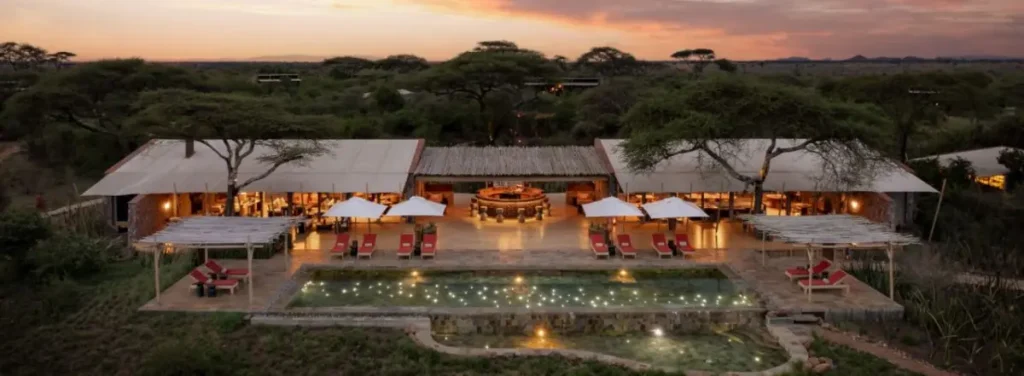
These lodges often feature spacious rooms or suites, swimming pools, wellness spas, elegant dining areas, libraries, and beautifully landscaped grounds that blend into the surrounding environment. Many overlook rivers, kopjes, or open plains where wildlife can often be seen directly from the property.
Permanent lodges work exceptionally well in regions such as Central Serengeti, where resident wildlife remains abundant throughout the year. Even when the migration has moved elsewhere, guests can still enjoy outstanding sightings of lions, leopards, elephants, buffaloes, giraffes, hippos, and numerous antelope species.
For travellers who value comfort, privacy, and a broader safari experience beyond the migration, permanent lodges provide an excellent balance between luxury and wildlife.
Luxury Tented Camps
Luxury tented camps combine the romance of traditional safaris with many of the comforts associated with high-end lodges.
Although guests sleep beneath canvas, the interiors often include king-sized beds, polished wooden furniture, elegant décor, en-suite bathrooms, rainfall showers, and private verandas overlooking the bush. Some camps even feature outdoor bathtubs where guests can relax while listening to the sounds of the Serengeti.
These camps create a stronger connection with nature than conventional hotels while maintaining exceptional levels of comfort. You remain close enough to hear wildlife throughout the night, yet enjoy attentive hospitality, gourmet cuisine, and personalised service.
For honeymooners and couples, luxury tented camps often provide one of the most memorable safari experiences available.
Where to Stay During Each Stage of the Great Wildebeest Migration
Because the migration moves continuously throughout the year, the ideal accommodation changes with the seasons.
December to March: Southern Serengeti and Ndutu
During the green season, the southern Serengeti and the Ndutu region become the heart of the migration. Fresh grass nourishes pregnant wildebeests, and the famous calving season transforms the plains into one of Africa’s greatest wildlife spectacles.
Accommodation in this region places guests within easy reach of enormous herds, newborn calves, and exceptional predator activity. Early morning game drives often reveal cheetahs scanning the plains, lion prides resting after successful hunts, and thousands of calves taking their first uncertain steps.
The open landscape also offers spectacular opportunities for landscape photography, particularly during sunrise when golden light stretches across the endless grasslands.
April to June: Central Serengeti and the Western Corridor
As rainfall patterns change, the migration gradually moves northwest through Central Serengeti toward the Western Corridor.
This period rewards travellers who appreciate quieter parks, dramatic skies, and enormous columns of moving wildebeests. Camps located near the Seronera Valley provide excellent access to both the migration and resident wildlife, while properties farther west position guests close to the Grumeti River as the first seasonal river crossings begin.
Staying in this region also allows visitors to explore diverse habitats, including riverine forests, open plains, and rocky kopjes that support impressive concentrations of predators.
July to October: Northern Serengeti
The northern Serengeti becomes one of Africa’s most sought-after safari destinations during the dry season.
Accommodation near the Mara River offers the best opportunity to witness the famous river crossings that define this stage of the migration. Because crossings occur unpredictably, staying close to the river dramatically increases your chances of arriving quickly when the herds begin to move.
Morning and afternoon game drives reveal far more than river crossings. Lions patrol the grasslands, elephants gather along riverbanks, leopards rest within riverine woodlands, and countless plains game thrive across the landscape.
Demand for northern Serengeti camps is exceptionally high during these months, making early booking essential.
November: Following the Rain South
As the short rains return, the migration begins moving back toward Central and Southern Serengeti.
Accommodation in central regions offers excellent flexibility during this transitional period. Guests can enjoy outstanding resident wildlife while following the early stages of the migration’s southward journey.
November also offers a quieter safari experience, allowing travellers to enjoy beautiful green landscapes and productive game drives with fewer vehicles.
Should You Stay in One Camp or Move with the Migration?
For short safaris lasting three or four nights, remaining in one carefully chosen camp may be the most practical option.
However, travellers spending a week or longer in the Serengeti often benefit from a multi-camp itinerary.
Moving between different regions allows you to experience changing landscapes, observe different stages of the migration, and encounter a greater variety of wildlife. It also reduces long daily drives, enabling you to spend more time enjoying the safari itself.
For example, a ten-day itinerary might begin in the southern Serengeti during calving season before continuing to Central Serengeti for outstanding predator sightings and concluding in the northern Serengeti as the herds approach the Mara River.
This style of itinerary provides a richer, more complete understanding of the Serengeti ecosystem and often becomes the highlight of a traveller’s African adventure.
Booking Early Makes a Difference
The Great Wildebeest Migration attracts visitors from around the world, particularly during the river crossing season between July and October.
Many of the best camps—especially smaller properties with only a handful of tents—reach full occupancy many months in advance. Booking early not only secures your preferred accommodation but also provides greater flexibility when selecting flights, guides, and safari routes.
If your travel dates coincide with school holidays or peak international travel periods, planning your safari at least nine to twelve months ahead is strongly recommended.
Your Camp Is More Than a Place to Sleep
The best safari accommodation does far more than provide a comfortable bed at the end of the day.
It becomes part of your overall experience.
This is where you wake before dawn to the distant roar of lions. It is where you share stories around a campfire beneath a sky filled with countless stars. This is where you enjoy freshly prepared meals while elephants wander peacefully across the plains in the distance.
Most importantly, it is the base from which every unforgettable wildlife encounter begins.
Choosing the right camp means giving yourself the greatest opportunity to witness the Great Wildebeest Migration at its most spectacular. When your accommodation is thoughtfully matched to the season, expertly positioned near the herds, and supported by knowledgeable guides, every game drive becomes an opportunity to experience one of the greatest natural wonders on Earth.
How to Plan the Perfect Great Wildebeest Migration Safari: The Complete Planning Guide for an Unforgettable African Adventure
Planning a Great Wildebeest Migration safari is one of the most exciting parts of preparing for an African adventure. It is also one of the most misunderstood.
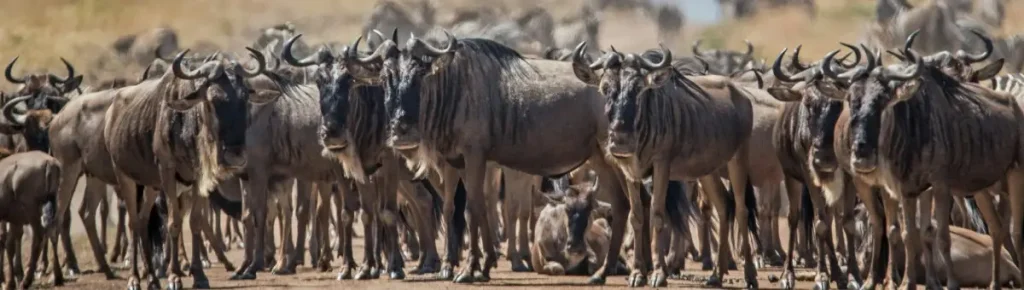
Unlike many holidays where you simply choose a destination, reserve a hotel, and decide which attractions to visit, planning a migration safari requires a deeper understanding of nature itself. The Great Wildebeest Migration is a living, constantly changing phenomenon. More than two million animals move across the Serengeti-Mara ecosystem in response to rainfall, fresh grazing, and seasonal conditions, meaning that timing, location, and careful planning all play an essential role in shaping your experience.
Every year, thousands of travellers arrive expecting to witness dramatic river crossings, only to discover that the herds have already moved. Others unknowingly book accommodation hundreds of kilometres away from the migration, spending valuable safari time driving instead of watching wildlife. These disappointments rarely occur because the migration failed to deliver. More often, they happen because travellers did not receive the right advice before booking.
The good news is that with thoughtful planning, realistic expectations, and guidance from experienced safari specialists, your chances of enjoying an extraordinary migration safari increase dramatically.
This guide explains everything you need to consider before booking, from deciding how many days to spend in the Serengeti to choosing between a fly-in safari and a road safari, selecting the right itinerary, avoiding common mistakes, and ensuring your journey delivers the wildlife experience you have always imagined.
Start With Your Dream Experience, Not Your Travel Dates
One of the biggest planning mistakes travellers make is choosing travel dates first and then trying to fit the migration into their schedule. While this approach works for many holidays, it is less effective for a wildlife experience that follows nature rather than a calendar.
Instead, begin by asking yourself a simple question:
What do I most want to experience?
Your answer will shape every decision that follows.
Perhaps you have always dreamed of watching thousands of wildebeests leap into the Mara River while crocodiles wait below. Maybe you want to photograph newborn calves taking their first steps across the southern Serengeti or spend quiet mornings watching cheetahs stalk gazelles on open plains. Some travellers are passionate birdwatchers, while others hope to combine a luxury safari with a romantic honeymoon in Zanzibar.
Each of these experiences takes place in different regions of the Serengeti and often during different months of the year.
Once you understand your priorities, choosing the right season becomes much easier. Rather than asking when the migration is “best,” you begin asking which stage of the migration best matches your interests.
This simple shift in perspective leads to far more satisfying safari experiences.
How Many Days Should You Spend on a Migration Safari?
Many first-time visitors underestimate the size of the Serengeti ecosystem.
Covering approximately 30,000 square kilometres, the greater Serengeti is larger than many countries. Wildlife moves freely across this vast landscape, and game drives often cover considerable distances as guides search for the best sightings.
For this reason, a migration safari should never be rushed.
Although it is technically possible to visit the Serengeti for two or three days, doing so leaves little room for flexibility. Wildlife is unpredictable. River crossings may happen tomorrow instead of today. Lions may remain hidden until late afternoon. Leopards often reveal themselves only after hours of patient observation.
The longer you stay, the greater your chances of witnessing remarkable wildlife behaviour.
Four to Five Days
A safari lasting four or five days provides an excellent introduction to the Serengeti. Guests enjoy multiple game drives, become familiar with the landscape, and have enough time to explore different habitats. This duration works particularly well for travellers combining the Serengeti with destinations such as Ngorongoro Crater or Tarangire National Park.
Six to Eight Days
For visitors whose primary goal is the Great Wildebeest Migration, six to eight days offers a much richer experience.
This additional time allows guides to adapt to changing wildlife movements, revisit productive areas, and remain patient when waiting for events such as river crossings. It also creates opportunities to appreciate the quieter moments of a safari—watching elephants interact beside a river, observing lion cubs playing outside their den, or simply enjoying the changing colours of the Serengeti at sunset.
Nine Days or More
Longer itineraries provide the ultimate migration experience.
With additional days, travellers can explore several regions of the Serengeti while following different stages of the migration. Instead of concentrating on one area, you experience the remarkable diversity of Tanzania’s wildlife, landscapes, and ecosystems.
Many experienced safari travellers describe these longer journeys as transformational rather than simply memorable.
Tanzania or Kenya: Which Destination Offers the Better Migration Experience?
This is one of the most frequently asked questions by travellers planning their first safari.
Both Tanzania and Kenya provide exceptional wildlife experiences, but they showcase different parts of the migration.
The Serengeti in Tanzania hosts the migration for most of the year. It is here that the annual cycle begins with the calving season, continues through the central plains, reaches the Western Corridor, and eventually arrives at the northern Mara River.
Kenya’s Maasai Mara becomes important when many herds cross the border during the dry season, usually between July and October. During this period, the reserve offers spectacular predator activity and excellent opportunities to witness river crossings.
If your goal is to understand the migration as a complete natural phenomenon rather than a single dramatic event, Tanzania provides the more comprehensive experience.
Visitors can witness newborn calves in February, vast moving herds in May, Grumeti River crossings in June, Mara River crossings in August, and the southward return later in the year—all within the same ecosystem.
For travellers with sufficient time, combining Tanzania and Kenya creates an unforgettable East African safari. However, if you must choose only one destination, Tanzania generally offers the greatest variety of migration experiences throughout the year.
Fly-In Safari or Road Safari?
Choosing how to travel between safari destinations has a significant impact on both your budget and your overall experience.
The Benefits of a Fly-In Safari
A fly-in safari uses light aircraft to connect different regions of the Serengeti.
Rather than spending an entire day driving between camps, guests enjoy a short scenic flight over one of Africa’s most spectacular landscapes. From the air, the Serengeti reveals its true scale. Rivers wind through endless plains, elephant herds appear as tiny moving dots, and enormous concentrations of wildlife become visible in ways impossible to appreciate from the ground.
Flying also allows you to maximise your safari time.
Instead of arriving at your next destination late in the afternoon after hours on the road, you may already be enjoying a game drive before lunch.
Fly-in safaris are particularly popular with honeymooners, photographers, luxury travellers, and anyone wishing to experience multiple regions without lengthy transfers.
The Appeal of a Road Safari
Road safaris offer a completely different perspective.
Travelling across northern Tanzania allows visitors to experience changing landscapes, traditional villages, volcanic highlands, and diverse wildlife beyond the Serengeti itself.
Unexpected sightings frequently occur during transfer days. You may encounter elephant families crossing the road, giraffes browsing among acacia trees, or colourful birdlife rarely seen elsewhere.
For travellers with more flexible schedules, road safaris often provide exceptional value while offering a deeper appreciation of Tanzania’s remarkable diversity.
The choice is not about which option is better. It is about which experience best suits your travel style.
Should You Choose a Private Safari?
Few decisions influence your safari experience more than whether you book a private or shared safari.
A private safari offers complete flexibility.
You decide when to leave camp, how long to remain at wildlife sightings, and which animals or landscapes deserve more attention. If your family wants to spend an hour watching elephant calves play in a river, there is no need to compromise with other travellers. If you are a photographer waiting for perfect light, your guide can patiently position the vehicle until conditions are exactly right.
Private safaris also make it easier to adapt to the migration.
Should reports indicate that the herds have moved farther north or gathered at a particular river crossing, your itinerary can often be adjusted without affecting anyone else’s plans.
Shared safaris remain an excellent option for budget-conscious travellers and those who enjoy meeting people from around the world. However, they naturally require greater flexibility and shared decision-making.
For a once-in-a-lifetime migration safari, many travellers consider the additional freedom of a private safari well worth the investment.
Want to book your private Great Migration safari? Click here for offers
Combining the Serengeti With Other Destinations
While the migration is undoubtedly the highlight of many Tanzanian safaris, limiting your journey to a single park means missing some of East Africa’s most remarkable landscapes and wildlife experiences.
The Ngorongoro Crater offers one of the highest concentrations of wildlife in Africa, including excellent opportunities to see black rhinos, large lion prides, and enormous buffalo herds within the world’s largest intact volcanic caldera.
Tarangire National Park is famous for its ancient baobab trees and impressive elephant populations. During the dry season, hundreds of elephants gather along the Tarangire River, creating unforgettable wildlife encounters.
Lake Manyara National Park introduces visitors to lush groundwater forests, flamingos, tree-climbing lions, and exceptional birdlife in a compact yet diverse setting.
Many travellers also conclude their safari with several relaxing days on Zanzibar’s white-sand beaches. After early morning game drives and exciting wildlife encounters, the warm waters of the Indian Ocean provide the perfect ending to an unforgettable African adventure.
Combining these destinations creates a more varied itinerary while showcasing the extraordinary diversity that makes Tanzania one of the world’s premier safari destinations.