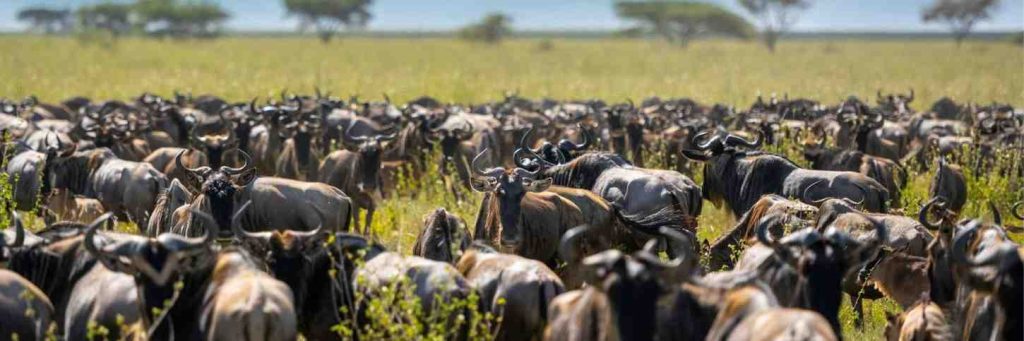
The Great Wildebeest Migration is often described as the greatest wildlife spectacle on Earth. Every year, more than 1.5 million wildebeests, accompanied by hundreds of thousands of zebras, gazelles, and elands, move through the Serengeti-Mara ecosystem in an endless search for fresh grazing and water. Their journey spans nearly 1,000 kilometres and supports one of the richest predator populations on the African continent.
For many travellers, witnessing this extraordinary event represents the fulfilment of a lifelong dream.
Yet despite the excitement surrounding the migration, one reality surprises many first-time visitors.
Not all Great Migration safaris are created equal.
Two travellers may visit the Serengeti during the same week, spend similar amounts of money, and return home with completely different experiences. One may witness multiple Mara River crossings, photograph cheetahs hunting on the plains, and enjoy close encounters with elephants, lions, and leopards. Another may spend long hours driving between distant camps, arrive after the herds have moved, and leave wondering why the experience did not match the images they had seen online.
The difference rarely comes down to luck.
It comes down to planning.
Choosing the right Great Migration safari is about much more than selecting a luxury lodge or finding the lowest price. It requires understanding how the migration works, how wildlife responds to seasonal changes, how experienced guides interpret animal behaviour, and why the location of your camp often matters more than the thread count of your bedsheets.
After decades of guiding visitors across the Serengeti ecosystem, one lesson becomes clear: the most memorable safaris are not always the most expensive. They are the ones designed around the movement of wildlife rather than the convenience of fixed itineraries.
This guide shares the same advice experienced safari planners give their own clients. It explains how to choose the right style of safari, avoid costly mistakes, understand what truly influences your experience, and book a journey that delivers unforgettable wildlife encounters rather than unrealistic promises.
If witnessing the Great Wildebeest Migration is on your bucket list, investing time in choosing the right safari is just as important as choosing the right destination.
Before You Choose a Safari, Understand What the Great Migration Really Is- How to Choose the Best Great Migration Safari
One of the biggest misconceptions surrounding the Great Wildebeest Migration is that it is a single event that takes place in one location.
In reality, the migration is a continuous ecological cycle that unfolds across one of Africa’s largest protected ecosystems. It has no official beginning and no definitive end. Every stage connects seamlessly to the next, creating a journey that has repeated itself for thousands of years.
Understanding this natural rhythm is the foundation of choosing the right safari.
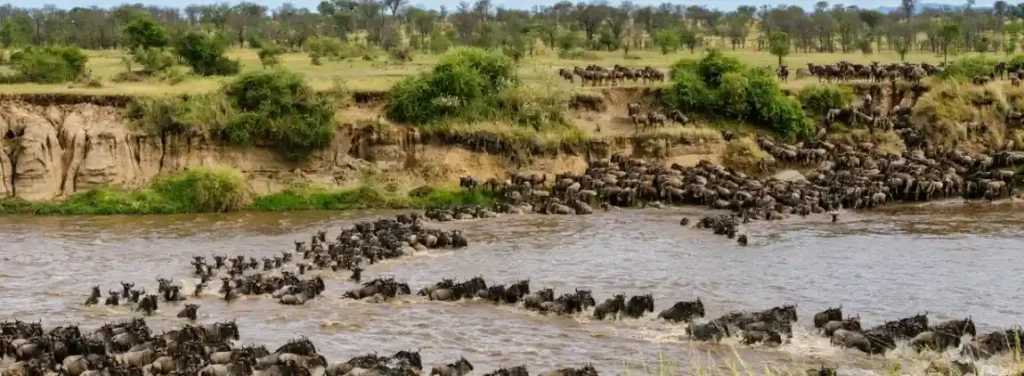
Many visitors arrive with a single image in mind: thousands of wildebeests plunging into the Mara River while crocodiles wait beneath the surface. Those dramatic crossings certainly deserve their legendary reputation, but they represent only a small chapter in a much larger story.
Long before the first river crossing takes place, the migration begins on the nutrient-rich short-grass plains of the southern Serengeti. Here, hundreds of thousands of pregnant wildebeests gather to give birth during one of the most remarkable synchronised calving events in the animal kingdom. Within just a few weeks, approximately half a million calves are born.
This extraordinary concentration of vulnerable young animals transforms the Serengeti into a stage for constant predator activity. Lions patrol the plains almost continuously. Cheetahs rely on open grasslands to chase inexperienced calves. Hyenas move tirelessly between herds, while vultures circle overhead, responding instantly to changes in predator behaviour.
Months later, those same calves begin the long journey north with the rest of the herd. They cross rivers, survive predator encounters, navigate drought, and eventually return to the southern plains where the cycle begins again.
The migration is therefore not defined by one spectacular moment.
It is defined by an uninterrupted story of survival.
Travellers who understand this simple truth approach their safari differently. Instead of chasing a single event, they appreciate every chapter of the journey, from the quiet beauty of calving season to the explosive drama of the Mara River crossings.
The Biggest Mistake People Make When Booking a Great Migration Safari- How to Choose the Best Great Migration Safari
Every year, safari specialists receive enquiries from disappointed travellers who have already booked accommodation, only to discover that it is nowhere near the migration during their travel dates.
This is by far the most common planning mistake.
The Serengeti National Park covers almost 15,000 square kilometres. When the surrounding conservation areas and the Maasai Mara are included, the migration moves across an ecosystem of roughly 30,000 square kilometres.
To put this into perspective, that is larger than several entire countries.
Many accommodation providers remain in one fixed location throughout the year. While they may offer beautiful rooms, excellent food, and attentive service, they cannot relocate when the migration moves hundreds of kilometres away.
As a result, some visitors spend four or five hours each day driving simply to reach the wildlife they came to see.
Those hours matter.
Predators are generally most active during the cool hours just after sunrise and before sunset. River crossings often happen unexpectedly. Cheetahs hunt most successfully before temperatures become too high. Lions frequently finish hunting during the first hours of daylight before retreating into shade for the afternoon.
If your lodge is located several hours away, you miss many of these extraordinary moments before your game drive has truly begun.
Experienced safari planners solve this problem by designing itineraries around the migration rather than around accommodation alone.
Instead of asking, “Which lodge looks nicest?” they ask a more important question:
“Where will the wildlife most likely be during your travel dates?”
Only after answering that question do they begin recommending camps.
This single decision often determines whether your safari becomes a pleasant holiday or a life-changing wildlife experience.
Why the Best Migration Safaris Are Designed Around Nature, Not Luxury-How to Choose the Best Great Migration Safari
Luxury has an important place in modern safaris.
After an early morning game drive, returning to a beautifully prepared breakfast overlooking the Serengeti is a wonderful experience. Spacious tents, attentive service, fine dining, and elegant surroundings certainly enhance your journey.
However, luxury should never replace location.
Imagine two different travellers.
The first books an ultra-luxury lodge with a private plunge pool, exceptional cuisine, and panoramic views. Unfortunately, the lodge sits several hours away from the migration because it remains in one fixed location throughout the year.
The second books a beautifully appointed mobile camp that follows the migration. The accommodation is slightly simpler, yet every morning begins only minutes from the herds.
Which traveller enjoys the better migration safari?
Almost always, it is the second.
This illustrates one of the most important principles in safari planning:
Luxury should support your wildlife experience—not replace it.
The finest safari operators understand this balance.
They combine exceptional hospitality with strategic camp locations, ensuring guests enjoy outstanding comfort without sacrificing access to wildlife.
That is why many of Africa’s most celebrated safari experiences take place in elegant mobile camps rather than permanent hotels.
The emphasis remains exactly where it should be—on the extraordinary wilderness surrounding you.
Want to explore our thrilling migration safari packages? Click here now
Understanding the Different Types of Great Migration Safaris
There is no single safari that suits every traveller.
A honeymoon couple celebrating their wedding will naturally have different priorities from a wildlife photographer carrying professional camera equipment. Families travelling with young children require different pacing than experienced safari enthusiasts visiting Africa for the fifth time.
Choosing the right style of safari begins with understanding how different experiences are designed.
The best safari is not necessarily the most luxurious or the most expensive.
It is the one that best matches your interests, expectations, and travel style.
Over the following sections, we will explore the major safari options—including luxury safaris, fly-in adventures, private safaris, family itineraries, honeymoon escapes, and specialist photography expeditions—to help you choose the experience that perfectly matches your vision of Africa.
By the end of this guide, you will understand not only which safari suits you best, but also why thoughtful planning makes all the difference between simply visiting the Serengeti and truly experiencing one of the world’s greatest wildlife spectacles.
Ready to Experience the Great Migration the Right Way?
The Great Wildebeest Migration is not something you should leave to chance. The right itinerary, the right guide, and the right camp can transform your safari from a memorable holiday into an experience that stays with you for the rest of your life.
Whether you are dreaming of photographing a dramatic Mara River crossing, watching thousands of wildebeest calves take their first steps on the southern plains, or enjoying a private luxury safari tailored entirely to your interests, careful planning is the key to success.
Our safari specialists live and work in Tanzania, following the migration throughout the year and designing itineraries based on current wildlife movements rather than fixed schedules. We help you choose the best regions, the right accommodation, and the ideal travel dates to maximise your opportunities while creating a seamless and unforgettable journey.
Contact our team today to begin planning your Great Migration safari, and let us help you experience the Serengeti as it was meant to be experienced—through the knowledge of local experts who know its rhythms, its seasons, and its remarkable wildlife.
Luxury Great Migration Safaris: What True Luxury Really Means in the Serengeti-How to Choose the Best Great Migration Safari
Luxury means different things to different travellers.
For some, it is a spacious suite with uninterrupted views across the savannah. For others, it is a private guide who understands exactly how to position a safari vehicle for the perfect photograph. Some imagine champagne breakfasts beneath an acacia tree, while others dream of ending each day beside a campfire under one of the clearest night skies in the world.
While these experiences certainly form part of a luxury safari, they do not define it.
True luxury during the Great Wildebeest Migration is not measured by marble bathrooms, infinity pools, or imported furnishings. It is measured by access, exclusivity, expertise, flexibility, and time spent in the right place at exactly the right moment.
This distinction is what separates an ordinary high-end holiday from an extraordinary wildlife expedition.
Anyone can build a beautiful lodge.
Only experienced safari specialists can consistently position guests where the migration is unfolding, anticipate changing wildlife movements, and create opportunities for genuinely unforgettable encounters.
When travellers understand this difference, they begin evaluating safaris differently. Instead of asking, “Which lodge has the nicest rooms?” they start asking, “Which safari gives me the greatest chance of experiencing the migration in the most meaningful way?”
That question leads to far better decisions.
Luxury Begins Long Before You Arrive in Tanzania
The finest migration safaris do not begin when your aircraft lands on a bush airstrip.
They begin months earlier through careful planning.
Experienced safari designers spend considerable time understanding each traveller’s interests, expectations, travel style, physical abilities, and previous safari experience.
A honeymoon couple seeking romance requires a completely different itinerary from a wildlife photographer hoping to document predator behaviour. Likewise, a family travelling with children needs a different pace from seasoned safari enthusiasts who wish to spend twelve hours each day tracking wildlife.
Rather than offering identical packages to every guest, reputable safari specialists design personalised itineraries that reflect individual priorities.
This planning stage often determines the success of the entire journey.
It influences where you stay, how long you remain in each region, whether you should fly or drive between destinations, and even the time you leave camp each morning.
Luxury, therefore, is not simply about comfort.
It is about having an itinerary built specifically for you.
Why the Best Luxury Safaris Follow the Migration
One of the defining characteristics of exceptional migration safaris is flexibility.
The wildebeests do not consult calendars before moving.
Unexpected rainfall in the northern Serengeti may encourage the herds to remain longer than anticipated. Delayed rains in the south may postpone their return journey. Fresh grazing can alter movement patterns within days.
For this reason, many of the most respected safari operators rely on carefully positioned seasonal camps that move several times each year.
These mobile camps allow guests to remain close to the migration without sacrificing comfort.
Unlike traditional camping, modern luxury mobile camps offer spacious canvas suites with handcrafted furniture, premium bedding, en-suite bathrooms, flushing toilets, hot showers, attentive staff, and exceptional cuisine prepared by talented chefs.
Electricity is usually generated through environmentally friendly solar systems, while thoughtful design ensures guests enjoy comfort without disrupting the surrounding ecosystem.
The greatest luxury these camps provide is not the accommodation itself.
It is proximity.
Imagine waking before sunrise, unzipping your tent, and finding thousands of wildebeests grazing across the plains only a short distance away.
Instead of beginning your day with a two-hour drive, you begin with wildlife already surrounding you.
That is a luxury few destinations in the world can offer.
Exclusive Wildlife Encounters Cannot Be Manufactured-How to Choose the Best Great Migration Safari
Many luxury holidays promise exclusive experiences.
The Serengeti is different.
No operator can guarantee that a lion will hunt beside your vehicle or that a Mara River crossing will occur precisely when you arrive. Wildlife remains wonderfully unpredictable.
What experienced safari specialists can provide is something equally valuable.
They maximise the likelihood of exceptional encounters.
Professional guides maintain regular communication with colleagues across the park, monitor recent wildlife movements, study changing weather conditions, and interpret subtle behavioural clues that most visitors never notice.
They recognise alarm calls from birds indicating nearby predators.
Observe fresh tracks crossing a road before dawn.
They notice the nervous behaviour of wildebeests gathering beside a river and understand that conditions may soon trigger a crossing.
These observations allow guides to position guests thoughtfully, often long before crowds arrive.
Patience also plays an important role.
Rather than rushing between sightings in search of constant activity, experienced guides understand when remaining in one location offers the greatest reward.
Some of the Serengeti’s most extraordinary moments happen after waiting quietly for nature to unfold at its own pace.
This patient, knowledgeable approach is one of the defining features of a truly luxurious safari.
Privacy Changes the Entire Safari Experience-How to Choose the Best Great Migration Safari
Luxury is also about freedom.
On a private migration safari, every game drive revolves around your interests.
If you discover a leopard resting in a sausage tree and wish to observe it for two hours, nobody asks you to move on.
If dramatic storm clouds create extraordinary photographic conditions across the plains, your guide can remain until the light becomes perfect.
Families may choose shorter game drives with relaxed picnic breakfasts beneath acacia trees.
Bird enthusiasts may spend an entire morning searching for secretary birds, kori bustards, and colourful bee-eaters.
Photographers often leave camp before sunrise and remain in the field until dusk to capture changing light throughout the day.
Your guide adjusts the experience accordingly.
This level of flexibility is rarely possible on shared safaris following fixed schedules.
For travellers making a once-in-a-lifetime journey to witness the migration, privacy often becomes one of the most valuable investments they make.
The Finest Guides Are the Greatest Luxury of All-How to Choose the Best Great Migration Safari
Visitors frequently remember the wildlife they saw.
Years later, they often remember their guide even more vividly.
A remarkable guide does far more than identify animals.
They explain why zebras usually travel ahead of wildebeests.
Describe how termites shape the Serengeti’s grasslands.
They interpret the behaviour of elephants, helping guests recognise subtle signs of curiosity, caution, or relaxation.
They know where lions den, where leopards prefer to hunt, and how changing wind direction influences predator movements.
Most importantly, they understand that every guest experiences the Serengeti differently.
Some travellers want detailed ecological explanations.
Others simply wish to absorb the silence of the plains.
Exceptional guides recognise these differences instinctively.
They know when to speak, when to remain quiet, and when to allow nature to become the storyteller.
No luxury facility can replace that level of expertise.
Luxury Means Time, Not Speed- How to Choose the Best Great Migration Safari
Modern travel often encourages visitors to see as much as possible in the shortest available time.
Luxury safaris embrace the opposite philosophy.
Instead of rushing through multiple parks in a few days, thoughtfully designed itineraries allow time for meaningful experiences.
Time to watch a pride of lions waking after sunrise.
its Time to observe elephants interacting peacefully around a waterhole.
Time to wait beside the Mara River as thousands of wildebeests gather, hesitate, retreat, and finally surge into the water.
These moments cannot be scheduled.
They reward patience.
Travellers who allow enough time consistently enjoy richer wildlife experiences because they remove the pressure of constantly chasing the next sighting.
The Serengeti reveals its greatest secrets slowly.
Luxury provides the freedom to appreciate them.
Fine Dining in the Heart of the Wilderness
Many first-time visitors are surprised by the quality of food served in remote safari camps.
Despite operating hundreds of kilometres from major towns, leading camps prepare remarkably sophisticated cuisine using fresh ingredients sourced whenever possible from local farms and trusted suppliers.
Breakfast may include freshly baked pastries, tropical fruit, locally grown coffee, and eggs prepared to your preference.
Lunches often feature vibrant salads, grilled meats, homemade breads, and seasonal vegetables.
Evening meals become memorable occasions where chefs combine international techniques with East African flavours, accompanied by carefully selected wines.
Some of the most unforgettable dining experiences happen away from camp.
Bush breakfasts overlooking the plains.
Private lunches beneath towering acacia trees.
Sunset cocktails served on rocky kopjes as the Serengeti glows beneath golden evening light.
These moments combine exceptional hospitality with extraordinary surroundings, creating memories that remain long after the safari ends.
Luxury and Conservation Go Hand in Hand- How to Choose the Best Great Migration Safari
The finest safari experiences depend upon healthy ecosystems.
Without thriving wildlife populations, protected habitats, and local communities committed to conservation, the Great Migration could not continue.
Responsible luxury operators recognise this connection.
Many camps employ staff from neighbouring communities, purchase locally produced goods, support schools and healthcare projects, and contribute directly to wildlife conservation initiatives.
Solar energy reduces environmental impact.
Water usage is carefully managed.
Construction follows strict environmental guidelines to minimise disturbance to wildlife.
Guests therefore become participants in conservation rather than simply observers.
Every safari helps support the long-term protection of one of the world’s most remarkable ecosystems.
Knowing that your journey contributes positively to wildlife conservation adds another meaningful dimension to the experience.
Choosing the Right Luxury Safari Operator
Luxury is ultimately defined by consistency.
Beautiful accommodation alone is not enough.
The finest safari operators combine expert planning, outstanding guiding, exceptional hospitality, carefully selected camps, reliable logistics, and genuine local knowledge into one seamless experience.
Before making your decision, ask important questions.
How often does the company operate migration safaris?
Do they own or work closely with camps positioned along the migration route?
Will your itinerary adapt if wildlife movements change?
Are guides professionally trained and licensed?
Can the company customise your safari around your personal interests?
The answers reveal far more than glossy photographs ever will.
A safari company that invests time understanding your expectations before recommending an itinerary usually delivers a far more rewarding experience than one offering identical packages to every traveller.
Experience the Great Migration in Complete Comfort
The Great Wildebeest Migration is one of the last truly wild spectacles on Earth. Experiencing it from the right camp, with an expert guide, and through a carefully designed itinerary transforms an incredible journey into an unforgettable one.
Whether you dream of waking to the sound of thousands of wildebeests outside your tent, enjoying private game drives with one of Tanzania’s finest guides, photographing dramatic predator encounters, or relaxing in elegant surroundings after each day’s adventure, the right luxury safari makes every moment count.
Our team lives and works in Tanzania and designs every itinerary around the migration’s real-time movements, your travel goals, and the season of your visit. We do not believe in one-size-fits-all safaris. We create personalised journeys that place you in the right location, at the right time, with the right people guiding your experience.
Contact our safari specialists today for a personalised Great Migration itinerary. Let us help you choose the perfect luxury safari, secure the best camps for your travel dates, and begin planning a journey that will remain one of the defining adventures of your life.